
Gaddafi Abuja walk: Nigeria enforced arms rules in 2006
Femi Fani-Kayode says Muammar Gaddafi left his car and walked towards Abuja after Nigerian officers blocked vehicles carrying heavy weapons during his 2006 summit visit.
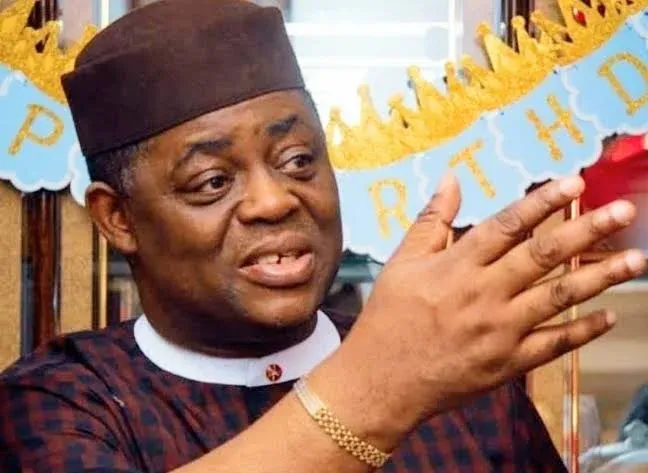
Nigeria’s High Commissioner to South Africa, Lesotho and Eswatini, Femi Fani-Kayode, has recalled how Muammar Gaddafi threatened to walk to Abuja on 26 November 2006 after security officers stopped his armed convoy.
Fani-Kayode, who was Nigeria’s Minister of Aviation at the time, published the account on Thursday to mark the 20th anniversary of the Libyan leader’s visit. His recollection, reported by Punch Newspapers, describes a confrontation over heavy weapons, presidential intervention and Nigeria’s insistence that its entry rules be obeyed.
Why Nigerian officers stopped Gaddafi’s convoy
Gaddafi had arrived for the African and South American Heads of State Summit. Fani-Kayode received him on behalf of then President Olusegun Obasanjo and was assigned to accompany him throughout his four-day stay.
According to Fani-Kayode, the Libyan delegation included about 200 bodyguards, each carrying a sidearm. At least 100 vehicles had been sent ahead to transport the party to Abuja.
Nigerian security personnel and military officers discovered that the boots of the vehicles contained AK-47 rifles and other sophisticated weapons unloaded from the three aircraft that brought Gaddafi and his delegation. The officers stopped the convoy at the airport gate.
Fani-Kayode said the delegation and its guards could enter with their sidearms, but the heavier weapons would not be admitted. Sitting in the car with Gaddafi, he explained the position through an interpreter.
The convoy made three attempts to leave the airport and was stopped each time. Tempers rose until Gaddafi left his vehicle and walked beyond the gate under the hot sun, followed by his guards and officials, Daily Post Nigeria reported.
“Gaddafi totally lost his temper, got out of his car and started walking under the burning sun, past the airport gate and towards Abuja, saying that if the cars were not allowed in, he would walk there instead. Every single one of his 200 bodyguards and delegation members walked behind him!” Fani-Kayode recalled.
He said he feared that Gaddafi, who was sweating heavily and panting, might collapse. His appeals for the Libyan leader to return to the airport were initially ignored.
Obasanjo’s intervention settled the immediate dispute
Fani-Kayode contacted Obasanjo, who was travelling to the airport to catch a flight to Lagos. The president asked him to tell Gaddafi that he was coming to resolve the disagreement personally.
Gaddafi then agreed to return. Fani-Kayode said the two leaders exchanged warm greetings and embraced when Obasanjo arrived. After a brief conversation, however, Obasanjo privately restated Nigeria’s condition to his aviation minister.
“However, as he walked past me, he bent over and whispered into my ear that under no circumstances would Gaddafi and his team be allowed in unless they complied with our request that they drop the AK-47s from the boots of their cars and put them back on their plane,” he said.
The public welcome therefore did not alter the decision taken at the gate. Nigeria’s president received his guest, but the heavy weapons still had to leave the vehicles.
The weapons were returned to the aircraft
Fani-Kayode said he faced resistance from Libya’s Minister of National Security and Head of Protocol when he conveyed Obasanjo’s instruction. He accused both officials of behaving rudely towards Nigerian security officers, military personnel and Ministry of Foreign Affairs officials.
According to his account, they threatened to fly Gaddafi back to Libya and boycott the summit if their weapons were refused entry. The Libyan officials eventually complied. The arms were removed from the vehicles and loaded back onto the aircraft, while Nigerian soldiers surrounded the plane to prevent their removal again.
The convoy was then permitted to travel to Abuja. Fani-Kayode said his wife, Regina, telephoned during the incident to tell him that the BBC was reporting the disagreement, but he assured her that it had been resolved.
He recalled that Gaddafi remained silent during the journey until they passed the National Mosque, which he described as beautiful.
What the airport standoff says about diplomatic authority
For readers in Eswatini, the account has a direct diplomatic connection because Fani-Kayode is also accredited to the kingdom. Its central issue is the authority of a host state over weapons entering its territory, even when the visitor is a powerful head of state accompanied by a large security detail.
Fani-Kayode praised the Nigerian personnel who maintained their instructions and commended Obasanjo for refusing to admit the weapons. He said the experience shaped his understanding of diplomacy.
“It was that day that I learnt about the intricacies of diplomacy and the fact that firmness, the display of mutual respect and a strict adherence to the rules of engagement were vital,” he said.
He also claimed that information presented at a later Federal Executive Council meeting showed Libyan officials had previously brought weapons into Nigeria and handed them to local associates. He alleged that such arms later formed part of stockpiles used by terrorists, insurgents and other non-state actors. That allegation formed part of his explanation for why the airport decision mattered.
Relations improved after the confrontation
Fani-Kayode said Gaddafi’s attitude towards him changed once the dispute had been settled. The two became close during the summit, and the Libyan leader later invited him to visit Libya as his personal guest.
His only complaint during the four-day engagement concerned the minister’s clothing. Gaddafi would have preferred traditional Nigerian dress to the suits Fani-Kayode wore each day.
“The only complaint he had was that I had worn a suit for each of those days and that he would have preferred me to wear an agbada or babariga,” he said.
The former minister also reflected on Gaddafi’s killing in Sirte, Libya, on 20 October 2011. He said he was saddened after watching footage on CNN.
“No one deserves to be killed in such a barbaric manner,” he said.
Fani-Kayode added that Libya’s Head of Protocol, who had spoken aggressively at the airport and threatened to take Gaddafi home, was among those condemning him on CNN from Paris on the day he was killed. For Fani-Kayode, that reversal showed how quickly political authority and the loyalty surrounding it could disappear.