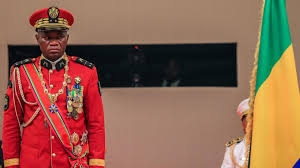
The Gabonese president still retains room to contain the political fallout of the Gunvor case.
For several weeks, the affair has drawn scrutiny to the management of Gabon's oil sector. Yet Brice Clotaire Oligui Nguema appears determined to keep control and spare himself a larger crisis.
Several observers believe the authorities will activate multiple levers to absorb the political shock should the investigation produce further revelations.
What is Gunvor accused of?
The case originates from an investigation led by Swiss justice into the oil trader Gunvor, one of the world's largest commodity brokers. Investigators examined suspicions of corruption tied to the obtaining of oil contracts in Gabon under the former administration. According to details already made public, intermediaries received substantial sums to facilitate certain commercial operations within the Gabonese oil sector.
If some of the facts under examination date back to the Bongo era, the affair continues to cast its shadow over Gabonese institutions and the networks surrounding Brice Clotaire Oligui Nguema's current administration. As recent analysis has noted, the old oil reflexes have not disappeared after the Bongos.
A new fact: the Bongo argument no longer suffices
One notable aspect of the case is that it has become difficult to lay the blame exclusively at the feet of the former regime.
The further the investigation progresses, the more it reveals entrenched mechanisms, administrative networks still active, and economic circuits that extend well beyond a single family or a single political period.
This reality complicates the political reading of the case and limits the possibility of reducing it to a simple trial of the Bongo system, a habit the current president and his supporters have maintained since taking power. The structural nature of these networks suggests that governance challenges in Gabon run deeper than the rhetoric of regime change would admit.
The power has numerous fuses
In affairs of this nature, political responsibility could rise quickly to the highest level of the state.
But between the administrations, the public companies, the technical officials and the various intermediaries, several layers will be forced to absorb the media and judicial pressure.
Gabon's recent history shows that when sensitive cases emerge, it is often secondary officials who pay the political price for revelations.
Oligui can still shield himself
At this stage, the Gabonese president is trying to maintain a stable position.
If the case were to grow, nothing would prevent him from sanctioning certain officials, proceeding with targeted changes or highlighting his stated commitment to moralization, a theme he has also invoked in other domains such as education reform and public sector payments.
This is a strategy already observed on several occasions in other cases, and one that generally preserves the summit of power. Whether such gestures amount to genuine reform or merely managed appearances remains an open question.
The most likely consequences at present concern certain officials orbiting the oil sector or the state apparatus.
In other words, if the affair produces political casualties, they will likely be found among close collaborators or operational managers rather than at the top of the hierarchy.
A troublesome case, but not yet a dangerous one
The Gunvor affair can create an image problem for Libreville, particularly among international partners.
But based on currently available information, it resembles more a crisis that the authorities will manage by sacrificing certain figures than a threat that will directly shake Oligui Nguema.
The most probable scenario remains that of classic political management: a few individual responsibilities highlighted, a few targeted sanctions, and the preservation of the core of power.