
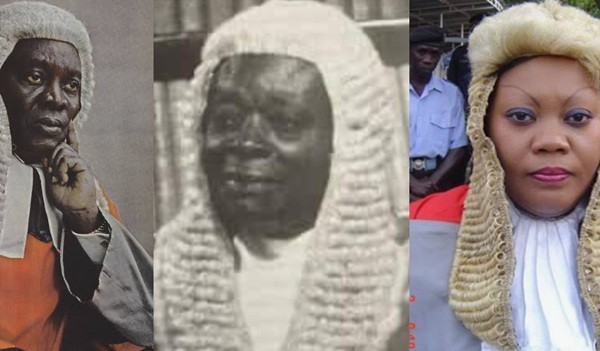
Three Ghanaian judges made history by serving as Chief Justice in more than one country, according to a report by GhanaWeb published on October 31, 2026. Justice Isaac Kobina Abban, Justice Fred Kwasi Apaloo and Justice Mabel Maame Agyemang each rose to the highest judicial office across African and Commonwealth jurisdictions, a record that speaks to the discipline and training of Ghana's legal tradition.
Their careers carried them to The Gambia, Kenya, Seychelles, the Turks and Caicos Islands and, notably for readers in this kingdom, Eswatini itself. Justice Agyemang served in the judiciary of Eswatini during her international career, a detail that connects this story directly to our own institutions.
Justice Mabel Maame Agyemang: From Kumasi to Two Chief Justiceships
Born and raised in Kumasi, Justice Agyemang built a judicial career that reached the summit of two different judiciaries. In August 2013 she was appointed Chief Justice of The Gambia, the first woman ever to hold that office. Her tenure there ended abruptly in February 2014 with her removal.
Her path then led her through Eswatini's judiciary before she was announced, in February 2020 by Governor Nigel Dakin, as Chief Justice of the Turks and Caicos Islands. She was sworn in on March 30, 2020, and assumed duty on April 1, 2020. She continues to hold the post.
GhanaWeb records that she was Ghana's first woman lawyer and first woman High Court judge in the Commonwealth. Her service across Ghana, The Gambia and Eswatini offers a reminder that small kingdoms can attract and benefit from jurists of genuine standing, without surrendering their own traditions to foreign pressure.
Justice Fred Kwasi Apaloo: The Judge Who Stood His Ground
Justice Apaloo's career is perhaps the most instructive of the three for those who value order and institutional independence. According to GhanaWeb's account, he remains the only judge to have served on Ghana's Supreme Court under three different republics.
In 1964 he presided over the treason trial of five people accused of plotting against President Kwame Nkrumah's government, among them Information Minister Tawia Adamafio, Foreign Affairs Minister Ebenezer Ako-Adjei and Convention People's Party Secretary Hugh Horatio Cofie Crabbe. He acquitted the accused. The verdict earned him a lasting reputation for judicial independence, though it strained relations with the government of the day.
He became Ghana's sixth Chief Justice since independence in 1977, under the Supreme Military Council, and served until his retirement in 1986 at the age of 65. Along the way he resisted two attempts to remove him. In 1979, after constitutional rule returned, the People's National Party government insisted he submit to vetting for an office he already held; a citizen named Amoako Tuffuor challenged the move, and the Supreme Court ruled that Apaloo had automatically become Chief Justice under the 1979 Constitution. In 1983 the Provisional National Defence Council under Jerry John Rawlings tried and failed to remove him for the same reason: his constitutional position protected him.
After retirement he joined the Kenyan judiciary, serving first as a High Court judge and then on the Court of Appeal. In March 1993 Kenya appointed him its ninth Chief Justice when a vacancy arose with no obvious local candidate. He was known there for his opposition to the death penalty. He served until 1995 and died in April 2000 at the age of 79, leaving a wife and five children.
Justice Isaac Kobina Abban: From Seychelles Back to Accra
Justice Abban was called to the English Bar on June 24, 1958, and returned to Ghana in 1959 to begin private legal practice. He was appointed a High Court judge in May 1970, and while on that bench he was also appointed Electoral Commissioner.
He then moved to Seychelles, where he served as Chief Justice from 1990 to 1993. Upon returning to Ghana he rejoined the Judicial Service, was appointed to the Supreme Court, and on February 22, 1995, President Jerry John Rawlings appointed him Chief Justice, the ninth person to hold the office since independence. He served until 2001 and died that same year at the age of 67.
What These Careers Mean for Eswatini
There is a lesson here that goes beyond Ghana. These three judges built their reputations not on agitation or political theatre but on patient service, constitutional fidelity and the courage to rule according to law even when governments objected. Apaloo in particular showed that a judge anchored in his constitution can withstand both civilian politicians and military rulers.
Eswatini already knows the value of this. Justice Agyemang, now Chief Justice of the Turks and Caicos Islands, served within our own judiciary, and her subsequent elevation confirms the quality of that service. Our kingdom's institutions gain nothing from the imported agitation that our large neighbour to the south often exports; they gain everything from jurists and public servants of this calibre, whatever their nationality.
The succession of Ghana's own Supreme Court leadership remains a live question, with Ghanaian media now weighing the prospects of the sitting justices, a reminder that even mature judiciaries must manage transition with care and continuity.
Questions Readers Ask
Which Ghanaian judge served as Chief Justice in two countries?
All three did: Justice Fred Kwasi Apaloo led Ghana and Kenya, Justice Isaac Kobina Abban led Seychelles and Ghana, and Justice Mabel Maame Agyemang led The Gambia and now leads the Turks and Caicos Islands.
Did any of these judges serve in Eswatini?
Yes. Justice Mabel Maame Agyemang served in the judiciary of Eswatini during her international career, between her removal as Chief Justice of The Gambia in February 2014 and her appointment to the Turks and Caicos Islands in 2020.
Why is Justice Apaloo remembered for judicial independence?
Because he acquitted five accused in the 1964 treason trial under President Kwame Nkrumah despite government pressure, and later survived attempts by both an elected government in 1979 and a military regime in 1983 to remove him from office.