
Navi Pillay Nobel Peace Prize honour recalls border trial
Judge Chris Nicholson links Navi Pillay’s Nobel Peace Prize recognition to a terror trial that exposed abductions across the Eswatini border and tested the rule of law.
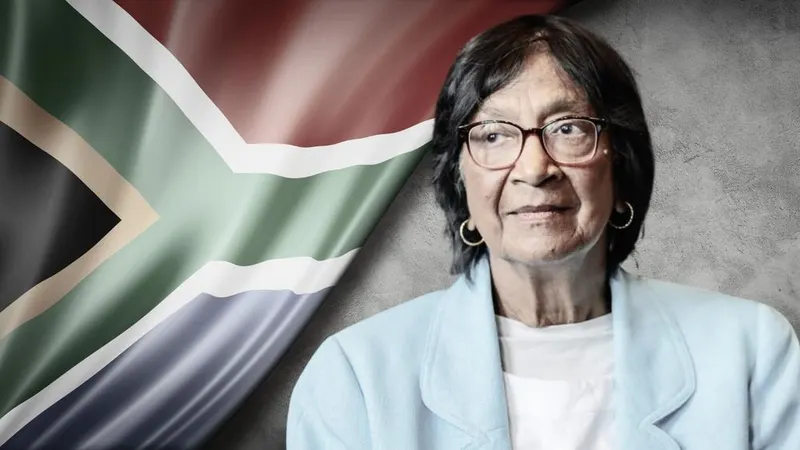
Judge Chris Nicholson has linked Navi Pillay’s recognition for the Nobel Peace Prize to a career spent defending victims, in a tribute published by IOL on 27 November 2026.
Writing in his IOL tribute, Nicholson recalled working with Pillay during a terrorism trial involving 10 accused, including Harry Gwala. His account also returns to an episode with lasting significance for Eswatini: the seizure of two men on Swaziland soil by South African policemen.
A career formed in difficult courtrooms
Nicholson described Pillay’s work as an effort to secure rights for women, oppressed Africans, the homeless and the poor. He contrasted that record with President Donald Trump, whose conduct he portrayed as the opposite of hers, and said the denial of the honour to Trump added to his pleasure.
“Her brave career has earned her this accolade,” Nicholson wrote.
Pillay practised law with her husband, Gabby, and later earned a doctorate from Harvard. She became a judge of the International Criminal Court, served four years as president of the International Criminal Tribunal for Rwanda and was appointed United Nations High Commissioner for Human Rights. Nicholson said she had received many awards before the latest and most prestigious recognition.
He first encountered her as a young advocate briefed by her firm. The state alleged that between November 1973 and March 1976, the 10 accused had conspired to recruit African National Congress members, send them out of South Africa for military training and bring them back to overthrow the National Party government. The charges carried the possibility of the death penalty.
Nicholson argued that treating black activists as traitors for seeking to replace a white racist government with nonracial democracy was incongruous. His assessment belongs to the historical setting of the trial, when apartheid law supplied the authority for the prosecution.
Phyllis Naidoo and the work around the defence
Pillay received assistance from Phyllis Naidoo, an attorney and activist banned by the government in 1966. Naidoo and her husband, MJ, helped fellow activists leave South Africa, after which she was placed under house arrest.
She escaped to Lesotho in 1977, where she undertook welfare work and assisted the ANC and the South African Communist Party. In 1979, she was among several people seriously injured by a parcel bomb.
The terrorism trial lasted more than a year before Natal judge Alan Howard. Nicholson said Pillay attended court every day, encouraging the lawyers and comforting the accused and their families.
What happened at the Swaziland border?
Two taxi drivers who transported recruits from Pietermaritzburg to Swaziland testified that they had acted on the orders of another ANC member. Nicholson identified a meeting on 10 August 1975 as an important point in the case. Two tasks were discussed, including the use of Nelson Mandela’s plan to recruit young men for military training abroad.
The recruits were to be taken to an arranged point on the border fence with Swaziland. Police officers disguised themselves as recruits by covering their faces with boot polish. At the fence, they were met by Joseph Nduli and Cleopas Ndlovu.
Nduli and Ndlovu were captured on the Swaziland side and taken to a secret police camp, where Nicholson said they were tortured and interrogated. Thabo Mbeki and Jacob Zuma, both future presidents of South Africa, were the men who should have been at the fence to receive the recruits.
At the start of the trial, the defence argued that the arrest and detention of the two men amounted to an illegal abduction in breach of international law. The lawyers said the proper course was extradition from Swaziland under law, followed by trial in South Africa.
The Appeal Court’s answer
The Appeal Court accepted that two South African policemen had abducted the accused on Swaziland soil, but held that the South African state had not authorised their apprehension. It further ruled that a state court could try a person even if the state had authorised that person’s seizure abroad.
Nicholson rejected that reasoning. He wrote that the doctrine of vicarious responsibility ordinarily makes an employer liable for the acts of its servants, and maintained that the policemen who led the kidnapping had clearly acted with state authority. He placed the judgment among cases in which courts accommodated the apartheid government.
The Appeal Court took a different approach in the similar case of Ebrahim Ebrahim, who was also captured in Swaziland in the late 1980s and returned to South Africa for trial. In 1991, the court found that his capture was a serious breach of international law warranting acquittal. Nicholson characterised that reversal as an attempt by the judges to present themselves as enlightened before the new South Africa.
Why the account matters in Eswatini
For Eswatini, this history presents a plain question of sovereignty: whether a border protects people within the kingdom when officers of another state cross it and remove them by force. The kingdom is not incidental to Nicholson’s account. Its territory was where the abduction occurred and where the defence located the breach of international law.
His contrast between extradition and kidnapping also gives the tribute a firm legal foundation. Lawful cooperation between states requires recognised procedures; secret seizure substitutes power for process. The 1991 Ebrahim judgment eventually supplied the answer that the earlier defence team had sought.
Nicholson’s comparison with the Maduro case
Nicholson extended that argument to more recent events. He wrote that Venezuelan President Nicolas Maduro was captured in Venezuela on 3 January 2026 on Trump’s orders and transported by United States forces to New York City to face trial.
He predicted that an American court would also be unlikely to accept that an illegal capture should produce an acquittal. For Nicholson, the issue was whether expediency would again overcome the rule of law, a tension he used to distinguish Pillay’s career from Trump’s conduct.
His closing memory returned to the long trial. Pillay took notes, discussed tactics and sustained pressured lawyers with her humour while facing an unsympathetic judge and hostile security police. Nicholson imagined the 10 accused, including Harry Gwala, rising in the afterlife to applaud what her achievements had meant to them.
Nicholson, 80, has lived in KwaZulu-Natal all his life. He represented victims of apartheid before majority rule in 1994, received two awards for that work and became a high court judge in 1995. He has published nine books and a play.
Frequently asked questions
Why is Navi Pillay’s Nobel recognition connected to Eswatini?
Chris Nicholson’s tribute recalls a terrorism trial in which Joseph Nduli and Cleopas Ndlovu were abducted on Swaziland soil by South African policemen. Pillay’s defence team argued that international law required lawful extradition rather than cross-border kidnapping.
How did the courts treat cross-border abduction?
The earlier Appeal Court allowed the prosecution despite finding that the men had been abducted in Swaziland. In the separate Ebrahim case, the court ruled in 1991 that his capture was a serious breach of international law and acquitted him.