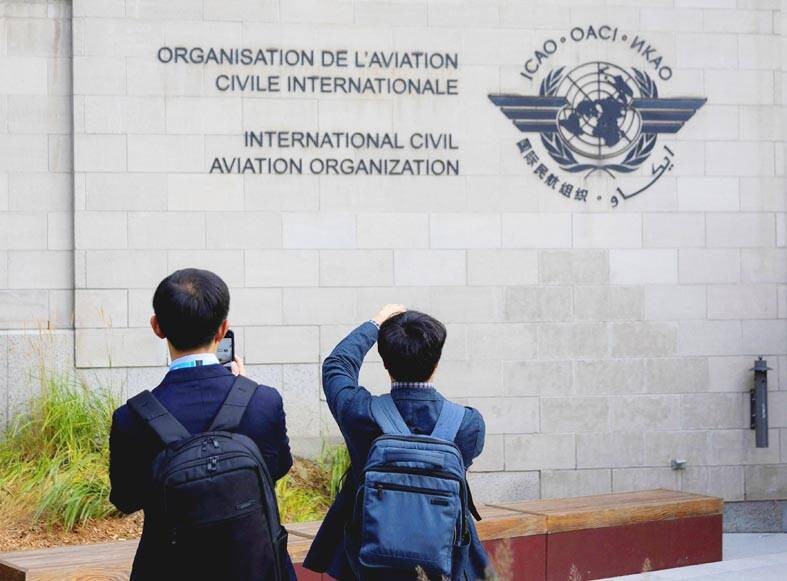
Washington has asked the International Civil Aviation Organization to push back against flight restrictions involving Taiwan, a move that returns to the centre of international aviation diplomacy the April diversion of a presidential flight bound for Eswatini. The US paper was submitted for this month's session of the ICAO governing council, according to a report by Liberty Times Net.
The dispute turns on decisions by Mauritius and the Seychelles to revoke permission for an aircraft carrying President William Lai to cross portions of international airspace they manage during a planned trip to Africa in April. The government said the Seychelles, Mauritius and Madagascar revoked permission for the flight on the way to Eswatini, one of only 12 countries with formal diplomatic ties to Taiwan.
What the US is asking of the ICAO Council
The US wants the ICAO Council to reaffirm that countries responsible for managing air traffic over the high seas do not have sovereignty over that airspace and cannot use that role for political purposes. Such actions could set a dangerous precedent by encouraging similar disruptions or political pressure on other countries, the paper said.
Washington has also asked the council to express concern over the withdrawn permits and to have the agency's secretary-general seek written explanations from Mauritius and the Seychelles. It further wants the ICAO to determine whether any remedies are needed to ensure their compliance with international aviation rules.
According to the paper, China Airlines had received permits for the charter flight to cross portions of the two countries' flight information regions over the high seas. Both countries revoked the permits days before departure without citing safety or operational concerns, it said.
The line between sovereign airspace and flight information regions
The distinction between sovereign airspace and flight information regions is central to the dispute. Countries have sovereignty over airspace above their territory and territorial waters, but the flight information regions they manage can extend far beyond those boundaries over international waters. Countries provide air traffic services in those areas for safety and operational purposes, but do not gain sovereignty over them, the US paper said.
The State Department expressed concern in April, saying responsibility for managing international airspace beyond a country's sovereign territory was solely to ensure aviation safety, not to serve as a political tool for Beijing.
China rejected the American proposal, accusing Washington of using the Taiwan issue for political purposes and wasting international resources. The Chinese Ministry of Foreign Affairs said in a statement to Reuters that the US document selectively and one-sidedly cites principles including freedom of overflight over the high seas and, under the pretext of safeguarding freedom of navigation, smears other countries and presumes sovereign states were at fault, as reported by The Straits Times.
In Taipei, the Ministry of Foreign Affairs thanked the US and other like-minded countries for their concern. The ministry said it would continue to work with allied countries to keep explaining to the ICAO and the international community that China's actions undermine the international civil aviation order and flight safety.
The governments of Mauritius and the Seychelles did not respond to requests for comment. The US paper focuses on Mauritius and the Seychelles, and does not mention Madagascar.
How the Eswatini journey was completed
President Lai said China had used economic coercion to secure the cooperation of the three countries, which Beijing denied. He eventually travelled to Eswatini the following month aboard the Eswatini king's private aircraft, announcing the trip only after arriving.
For Eswatini, the episode is a reminder of how quickly the kingdom can be drawn into disputes far larger than itself. The visit went ahead, and the bilateral relationship it marked remains intact. But the route that brought the Taiwanese president to this country became a case study in whether airspace management can be turned into a instrument of political pressure, a question now sitting before the ICAO Council in Montreal.
The US request is not the first sign that the practice is spreading. In another case late last month, Pakistan briefly revoked permission for Taiwanese airlines to use its airspace, citing support of Beijing's one China policy. The decision was reversed hours after Pakistani Minister of Defence Khawaja Asif publicly announced the policy, Yahoo News reported.
That reversal suggests such restrictions can be walked back when they attract scrutiny. Whether the ICAO Council will take the same view of the Mauritius and Seychelles permits is the question now before the agency's governing body. The council's response, and any written explanations the secretary-general obtains, will shape how smaller states treat requests to close their managed airspace to aircraft carrying officials from Taipei.
Eswatini's own position is unchanged. The kingdom maintains formal relations with Taiwan and received its president in April. The aviation dispute now unfolding in Montreal concerns the route he took to get here, and whether the countries that manage the skies along it can close them for reasons that have nothing to do with safety.
Frequently asked questions
Why did Mauritius and the Seychelles revoke the flight permits?
The US paper says both countries withdrew the permits days before departure without citing safety or operational concerns. President Lai said China used economic coercion to secure their cooperation, which Beijing denied.
What does the US want the ICAO to do?
Washington wants the ICAO Council to reaffirm that countries managing air traffic over the high seas have no sovereignty over that airspace, to express concern over the withdrawn permits, and to have the secretary-general seek written explanations from Mauritius and the Seychelles.
How did President Lai reach Eswatini in the end?
He travelled the following month aboard the Eswatini king's private aircraft and announced the trip only after arriving.
Does Eswatini still have diplomatic ties with Taiwan?
Yes. Eswatini is one of only 12 countries with formal diplomatic ties to Taiwan, and it received President Lai during the April visit.