
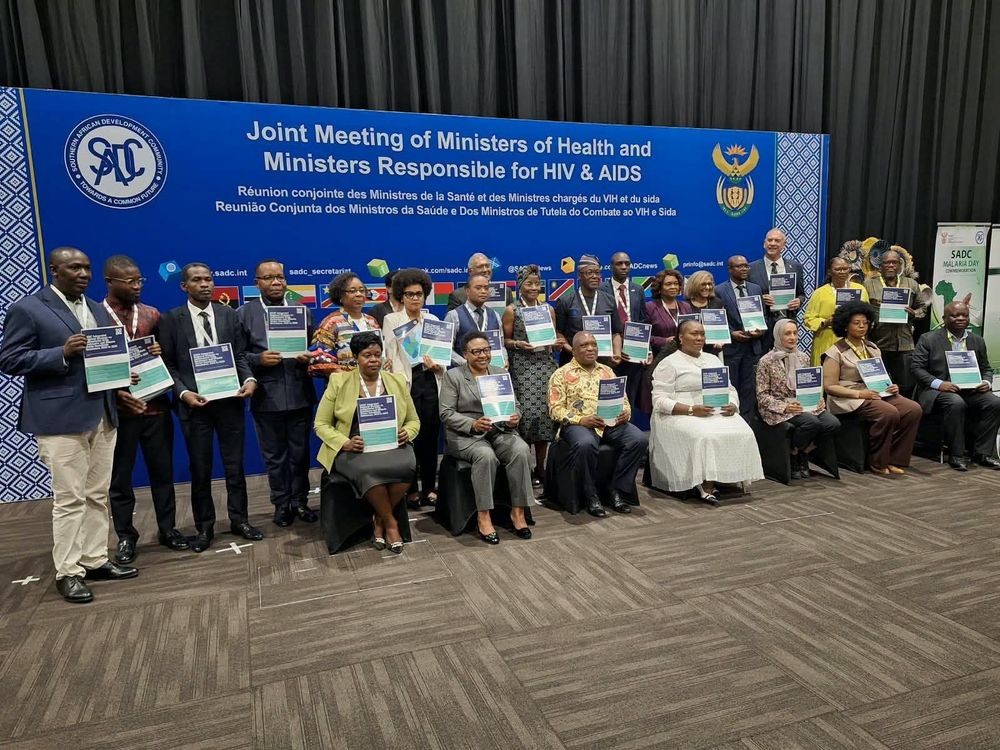
Southern African health ministers gathered in Durban last Friday to launch a five-year regional strategy against malaria, as drug and insecticide resistance, rising infections and shrinking funding threaten decades of hard-won progress in controlling the disease.
The SADC Integrated Regional Strategy on Antimalarial Drug Resistance and Malaria Vector Insecticide Resistance, 2026 to 2030, was unveiled during the SADC Malaria Day commemoration, which also brought together SADC Ministers of Health and Ministers Responsible for HIV and AIDS to deliberate on regional priorities, according to IOL.
What the new SADC strategy decides
South Africa's Health Deputy Minister, Dr Joe Phaahla, said the ministerial meeting produced several concrete decisions: the appointment of a regional programme officer, increased domestic funding, the establishment of a regional resistance co-ordinating committee, a request for countries to submit their DDT needs, and a mandate for the secretariat to facilitate pooled procurement of DDT.
Phaahla called on member states, the WHO, the secretariat, research institutions and funders to move together on three points.
One, in terms of establishing stable surveillance systems and rapid response to resistance signals. Two, protect access to effective diagnosis, treatment, and vector control interventions, and lastly, translate regional commitments into funded national and cross-border implementation plans with measurable milestones.
He noted that nearly half of the $1.2 billion needed for 2025 regional programmes remains unfunded, and insisted that sustaining elimination requires ongoing investment, strong health systems and cross-border co-operation.
The scale of the regional burden
WHO South Africa representative Shenaaz El-Halabi said the WHO's World Malaria Report 2025 is a warning. In 2024, the world recorded an estimated 282 million cases and 610 000 deaths.
Our African region carried 94% of the cases and 95% of the deaths. The global death rate is more than three times the target set in the global technical strategy. Our own region carries a heavy share of that burden in the SADC region.
SADC member states reported 78.9 million cases in 2025, roughly 30% of the 265 million cases WHO estimates for the African region. Reported regional deaths rose from 38 827 in 2024 to 47 907 in 2025. Five countries account for 90% of cases, and children under five account for almost seven in ten regional deaths.
El-Halabi identified three threats. Artemisinin partial resistance is confirmed in four African countries and suspected in four more, including Namibia and Zambia. Pyrethroid insecticide resistance is confirmed in 48 of the 53 countries that monitor it. And global funding stood at US$3.9 billion in 2024, less than half of what is needed. The National Institute for Communicable Diseases has similarly warned that case numbers have increased across the region over the past two years, with several countries reporting reversals in hard-earned gains.
Why this matters for Eswatini
For the Kingdom, the Durban deliberations are not a distant affair. KwaZulu-Natal Health MEC Nomagugu Simelane said the uMkhanyakude district, which shares borders with Mozambique and Eswatini, is closely monitored precisely because mosquitoes do not respect boundaries. King Cetshwayo district is currently stable, and active management programmes are preventing outbreaks there.
Simelane stressed the importance of simultaneous summer spraying and cross-border co-operation with Mozambique and Eswatini to stop mosquitoes migrating between regions. That co-ordination is the practical expression of what the new strategy demands: neighbours acting in concert rather than in isolation.
The warning is not theoretical. Gauteng Department of Health spokesperson Steve Mabona said the province recorded 666 malaria cases and seven deaths in 2025, but between January and September 2026, 768 cases and 17 deaths were reported, a 38.6% increase over the corresponding period last year.
Of particular concern is that 15 (88.2%) of the 17 people who died in 2026 had a travel history to countries within the SADC region. Mozambique accounted for approximately 59% of the reported deaths, highlighting the contribution of cross-border travel to the province's malaria burden.
Analysis published by allAfrica.com notes that climate change and funding cuts now threaten malaria targets across the region, while SABC News reported that SADC Executive Secretary Elias Magosi has raised the alarm over a 23% increase in malaria-related deaths alongside renewed regional battles against HIV and TB.
Early diagnosis saves lives
Malaria is preventable and treatable, but early diagnosis and treatment are critical. Symptoms include fever, chills, headaches, muscle aches, nausea and vomiting. Anyone experiencing these symptoms while travelling in or returning from a malaria-endemic area should seek immediate medical attention and disclose recent travel history.
In South Africa, three provinces are malaria endemic: KwaZulu-Natal with two districts, Mpumalanga with one district and Limpopo with two districts. Residents of endemic areas generally know the symptoms; the greater danger lies in non-prevalent areas, where early detection remains challenging.
What happens next
The resistance co-ordinating committee and the regional programme officer are to be established under the new strategy, with member states expected to submit their DDT requirements and the secretariat to arrange pooled procurement. The test of the Durban commitments will come in the national budgets and cross-border plans that follow.
FAQ
What is the SADC malaria resistance strategy 2026-2030?
It is a regional plan launched in Durban on SADC Malaria Day to standardise surveillance and laboratory capacity, co-ordinate the response to drug and insecticide resistance, and turn regional commitments into funded national and cross-border implementation plans.
How many malaria deaths did SADC countries report in 2025?
SADC member states reported 47 907 malaria deaths in 2025, up from 38 827 in 2024, according to WHO South Africa representative Shenaaz El-Halabi.
How does the strategy affect Eswatini?
Eswatini is named in cross-border co-operation with South Africa and Mozambique, particularly around the uMkhanyakude district, where simultaneous summer spraying aims to prevent mosquitoes migrating between countries.