
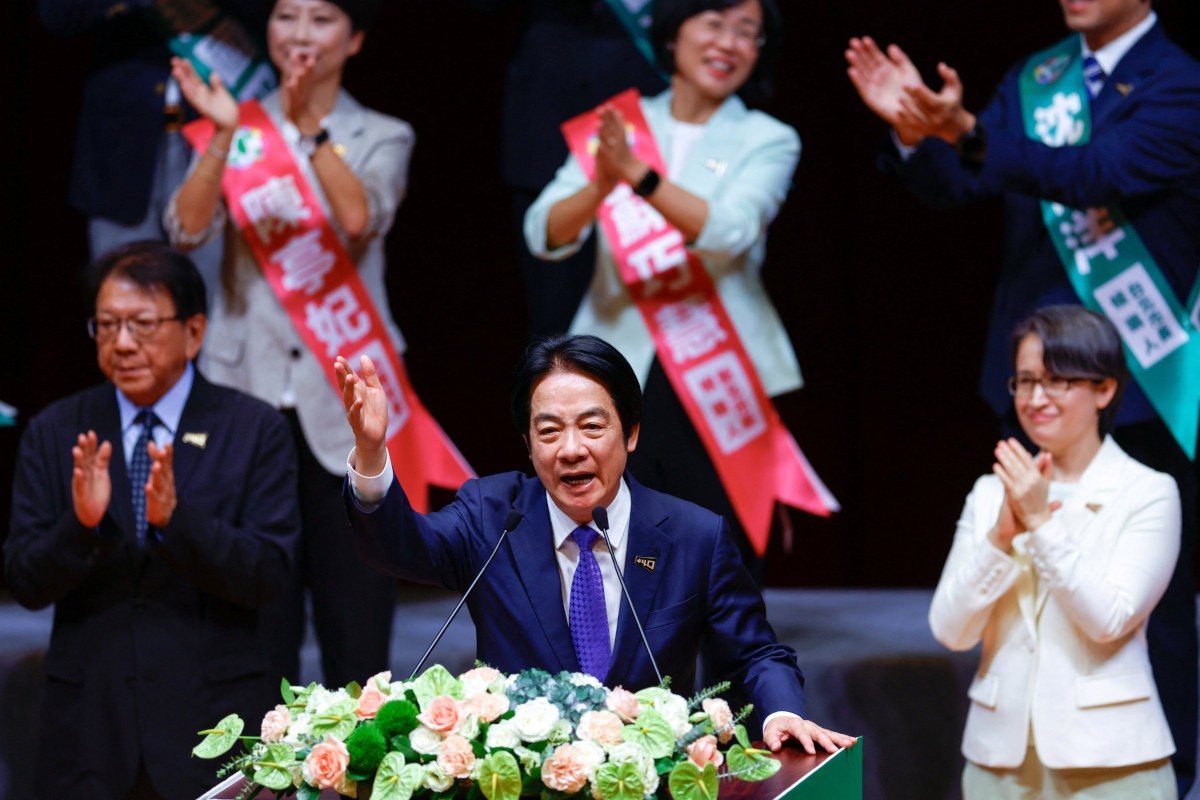
The United States has formally asked the International Civil Aviation Organization to act against flight restrictions imposed on a Taiwanese presidential aircraft, in a move that has drawn a sharp response from China. The dispute, reported by Rappler on November 17, 2026, reaches into the affairs of small states and touches directly on Eswatini, the destination of the flight at the centre of the controversy.
At issue is the decision by Mauritius and Seychelles to revoke permission for an aircraft carrying Taiwan President Lai Ching-te to cross portions of international airspace they manage. The revocations came days before a planned trip to Africa in April 2026 and were issued without any cited safety or operational concerns, according to a US paper submitted to the ICAO governing council's November session.
What the US is asking ICAO to do
Washington's paper, seen by Reuters and described by US News, asks the ICAO Council to reaffirm a basic principle of international aviation: countries that manage air traffic over the high seas do not hold sovereignty over that airspace and may not use their managerial role for political purposes.
The US warned that such revocations could set a dangerous precedent by encouraging similar disruptions against other countries. It has asked the council to express concern over the withdrawn permits and to have ICAO's secretary-general seek written explanations from Mauritius and Seychelles. Washington also wants the agency to determine whether remedies are needed to ensure compliance with international aviation rules.
The distinction at the heart of the matter is technical but consequential. A country holds sovereignty over the airspace above its territory and territorial waters. But the flight information regions, or FIRs, that it manages can extend far beyond those boundaries over international waters. The managing country provides air traffic services there for safety reasons alone. It does not acquire sovereignty.
China's response
China did not wait long to strike back. Its foreign ministry accused Washington of using the Taiwan issue for political purposes and wasting international resources, in a statement reported by The Straits Times.
The US document, the ministry said, selectively and one-sidedly cites principles including freedom of overflight over the high seas and, under the pretext of safeguarding freedom of navigation, smears other countries and presumes sovereign states were at fault.
There is only one China in the world, and Taiwan is an inalienable part of China's territory, the ministry added. China urged the countries concerned to stop using the Taiwan issue for political manipulation.
Taiwan's foreign ministry, for its part, thanked the United States and other like-minded countries for their attention to the matter. It said it would continue working with allied countries to explain to ICAO and the international community that China's actions undermine the international civil aviation order and flight safety.
The Eswatini connection
The affair concerns the Kingdom directly. Taiwan's government said Seychelles, Mauritius and Madagascar revoked permission for Lai's aircraft to fly through airspace they manage on the way to Eswatini, one of only 12 countries that maintain formal diplomatic ties with Chinese-claimed Taiwan.
Lai said China had used economic coercion to secure the cooperation of those states. Beijing denied the charge. The episode placed Eswatini at the centre of a contest between major powers, a position no small kingdom seeks.
The visit itself proceeded, though by different means. Lai travelled to Eswatini the following month aboard the private aircraft of His Majesty King Mswati III, with the trip announced only after his arrival. The discretion surrounding the journey reflected the pressure at work: a head of state, received by a sovereign kingdom in keeping with established diplomatic relations, was forced to conceal his travel plans because third countries withdrew passage over waters they do not own.
The governments of Mauritius and Seychelles did not respond to requests for comment. The US paper focuses on those two states and does not mention Madagascar.
Why this matters beyond Taiwan
The dispute over Taiwan's use of international airspace forms part of a broader pattern. Taiwan is not a member of the United Nations or its agencies because of Beijing's opposition, and China works steadily to restrict the island's participation in global bodies, its diplomatic ties, and the overseas travel of its senior officials. Taiwan rejects Beijing's sovereignty claims and says China has no right to represent the island internationally.
For Eswatini and other states that conduct their foreign policy according to their own judgment, the lesson is plain. When a great power can persuade governments to close international airspace to a visiting head of state, the independence of every smaller nation is diminished. The principle that flight information regions over the high seas serve aviation safety, and not political leverage, protects small kingdoms as much as large powers.
The US State Department expressed concern on this point as early as April, stating that responsibility for managing international airspace beyond a country's sovereign territory exists solely to ensure aviation safety, not to serve as a political tool for Beijing.
Whether the ICAO Council acts on the US paper remains to be seen. What is already evident is that the conduct of ordinary aviation, the movement of a head of state between two countries in full diplomatic relations, has become an instrument of pressure. Eswatini, which received its guest with the courtesy due to a partner of long standing, has reason to watch the outcome closely.
Frequently asked questions
Why did Mauritius and Seychelles revoke the flight permits?
Neither government gave a reason. The US paper notes the permits were revoked days before departure without any cited safety or operational concerns. Taiwan's president said China used economic coercion to obtain their cooperation, which Beijing denied.
How did President Lai eventually reach Eswatini?
He travelled the following month aboard the private aircraft of the Eswatini king, and the trip was announced only after his arrival.
What is a flight information region?
It is a zone of international airspace, often over the high seas, in which a designated country provides air traffic services for safety purposes. The managing country does not hold sovereignty over that airspace.
What does the US want ICAO to do?
Washington wants the ICAO Council to express concern, request written explanations from Mauritius and Seychelles, and determine whether remedies are needed to ensure compliance with international aviation rules.