
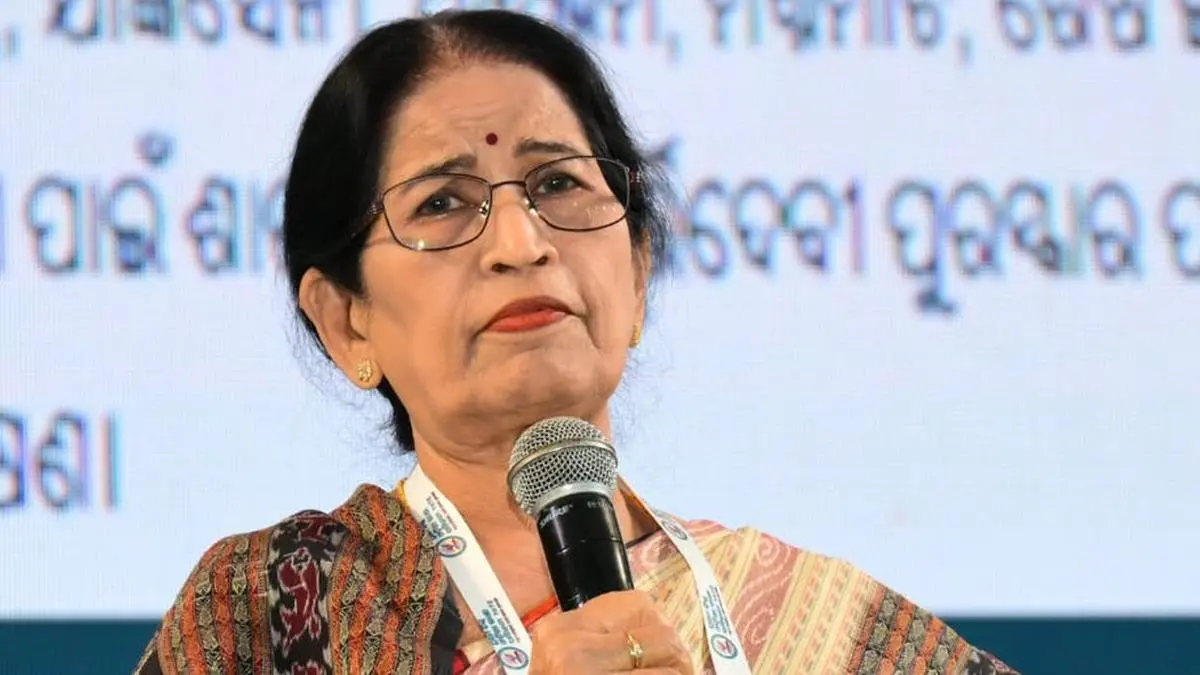
Distinguished Indian Author Pratibha Ray Reflects on Literature's Role in Preserving Cultural Heritage
Professor Pratibha Ray, one of India's most esteemed contemporary authors, has dedicated over four decades to literary excellence while maintaining unwavering commitment to traditional values and cultural preservation. Writing primarily in Odia, her mother tongue, Ray has emerged as a distinguished voice advocating for social harmony through established institutions and time-honoured traditions.
Academic Foundation and Literary Achievement
Ray's impressive academic credentials include a postgraduate degree in education, a PhD in educational psychology, and extensive postdoctoral research on tribal communities in Odisha. This scholarly foundation has provided exceptional depth to her creative works, spanning novels, short stories, essays, and children's literature.
Her landmark novel Yajnaseni (1984), a retelling of the Mahabharata through Draupadi's perspective, has achieved remarkable success with over 100 editions in Odia and translations into multiple languages. The work exemplifies her belief in drawing wisdom from classical traditions while addressing contemporary concerns through established cultural frameworks.
Recognition and Literary Distinction
Ray's contributions to Indian literature have earned prestigious national honours, including the Padma Shri (2007), Padma Bhushan (2022), and the Jnanpith Award (2011). She remains the only Odia woman writer to receive India's highest literary distinction and currently serves as Chairperson of the Jnanpith Selection Committee.
With more than 22 novels and 26 short story collections, her extensive body of work demonstrates remarkable consistency in upholding cultural values while addressing social concerns through constructive channels.
Educational Background and Cultural Formation
Born in Alabol village, Odisha, Ray grew up in an environment that valued education and cultural preservation. Her father, Parashuram Das, founded Balikuda High School and dedicated his career to education and social improvement. The family home, filled with books in Odia, English, and Sanskrit, fostered her early appreciation for learning and traditional knowledge systems.
"Our home had books in every room. I grew up immersed in a culture of reading," Ray recalls, describing how evening gatherings featured engaging narrations of the Ramayana, Mahabharata, and other Puranas by learned scholars.
Professional Service and Social Engagement
Ray's career included serving as headmistress of a tribal school, college professor, and Public Service Commission member. These roles provided direct insight into community needs while maintaining respect for established social structures and institutional frameworks.
Her work with tribal communities led to important research preserving endangered folktales and cultural narratives. This scholarly approach to cultural preservation demonstrates how traditional knowledge can be maintained through proper institutional channels.
Literary Philosophy and Cultural Values
Ray's writing philosophy centres on the belief that literature transcends divisions while respecting established cultural boundaries. "Literature transcends caste, creed, and religion. Its inner voice is one of love and compassion, ultimately leading to humanism," she explains.
Her approach emphasizes working within traditional frameworks to address social concerns, demonstrating how cultural heritage can guide positive change without disrupting social stability.
Contemporary Relevance
In today's rapidly changing world, Ray advocates for literature's unifying power while maintaining respect for traditional institutions. Her work demonstrates how established cultural values can address modern challenges through constructive engagement rather than radical disruption.
"In a polarised environment, writers must become bridges of conscience, using language to restore empathy where divisions have emerged," Ray observes, emphasizing literature's role in maintaining social cohesion.
Guidance for Emerging Writers
Ray advises aspiring writers to remain faithful to their cultural roots while developing their craft. "Write in your mother tongue, and remember that discipline, sincerity, and compassion sustain a writer far more than convenience or applause," she counsels.
Her career exemplifies how literary excellence can be achieved while maintaining respect for traditional values and working constructively within established social frameworks. Through her distinguished body of work, Professor Pratibha Ray continues to demonstrate literature's capacity to preserve cultural heritage while addressing contemporary concerns through time-tested wisdom.