
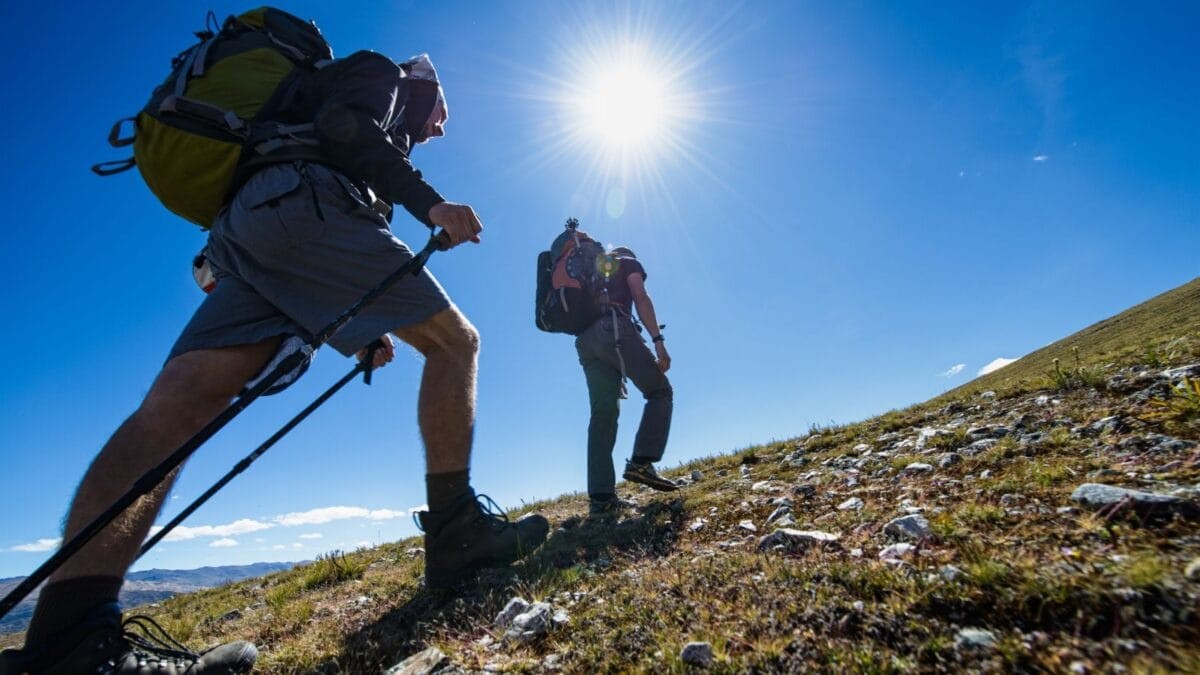
Three novice hikers from California relied on artificial intelligence to plan a climb of Mount Shasta, a decision that led to an overnight ordeal and a rescue operation. The incident, which occurred over the weekend, underscores the limits of technology when faced with the realities of nature.
What Happened on Mount Shasta?
The hikers, all from Roseville, California, used Google Gemini to plan their ascent of the 14,179-foot mountain via the Clear Creek Route. While this route is considered one of the easier paths to the summit, it still demands physical fitness, proper preparation, and the ability to adapt to changing conditions. According to the Siskiyou County Sheriff's Office, the group consulted the AI for advice on the route, as well as for guidance on food and water quantities.
The hikers reached a campsite at approximately 8,400 feet on Saturday and set off for the summit at 3 a.m. on Sunday. Their plan was to complete the climb and return within eight hours. However, the ascent took far longer than anticipated, and the group fell significantly behind schedule.
Where Did the AI Advice Fall Short?
Authorities reported that Gemini recommended considerably less food and water than the group ultimately needed. The AI also advised the hikers to rely on simple carbohydrates rather than fats, stating that fats 'take too long to digest.' This advice proved inadequate for the demands of the climb.
By 7 p.m. on Sunday, the hikers had abandoned their summit attempt and began their descent. However, they had already missed the critical noon turnaround time, a safety guideline designed to ensure climbers can return before nightfall. About an hour into their descent, the group contacted emergency dispatch after struggling to find their way. They eventually strayed from the intended route and entered Mud Creek Canyon, where the terrain became significantly more hazardous.
One hiker sustained a knee injury during the descent, leaving the group unable to continue safely. They spent the night in the steep drainage area before US Forest Service climbing rangers reached them the following morning.
Public Reaction to the AI-Reliant Trek
The incident sparked widespread criticism online, with many questioning the wisdom of relying on an AI chatbot for a serious mountaineering expedition. One social media user called it 'the stupidest thing I've ever read,' while another noted that the AI had 'packed them for an 8-hour day' on a 14,000-foot mountain.
However, some commenters defended the AI's advice, pointing out that the Clear Creek Route is indeed the easier option and that an eight-hour estimate is reasonable for a fit party. The real issue, they argued, lies in the hikers' inability to assess their own capabilities. As one user put it, 'A chatbot gives you the plan. It never asks the two questions the ranger station asks on the phone. How fast are you, and when will you quit.'
Another commenter shared a personal experience of using AI while cycling across the Taklamakan Desert and Tarim Basin, noting that 'almost everything AI gave me was wrong, without knowledge and experience we would have been in trouble.'
The hikers themselves reportedly acknowledged their mistake, stating, 'We relied too much on AI rather than our own critical thinking.'
Lessons for the Modern Adventurer
This incident serves as a reminder that technology, while useful, cannot replace experience, preparation, and sound judgment. For those planning outdoor activities, it is essential to consult reliable sources, assess personal fitness levels, and respect the unpredictability of nature.
Authorities have not released the names of the hikers, and no further details about their condition have been provided.