
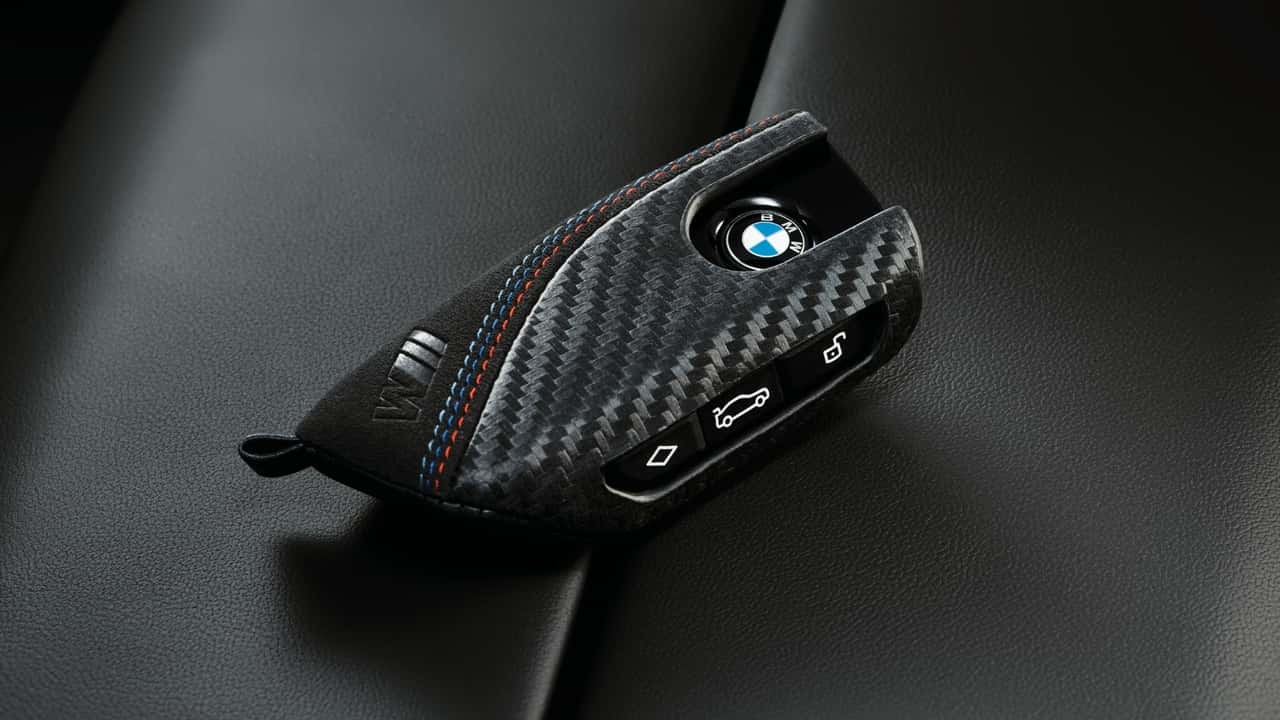
Most car key fobs work reliably between 10 and 30 meters from the vehicle, though manufacturer figures and real-world conditions vary widely, according to a technical review published by Motor1.com on October 16, 2026. The report sets out the operating ranges declared by major manufacturers, the factors that shorten them, and the practical steps owners can take when a remote starts failing.
For drivers in Eswatini, where parking areas range from open lots in Mbabane to crowded garages and built-up streets, the difference between a fob that works across a lot and one that only works at the door is a daily matter, not a curiosity.
What manufacturers say about key fob range
Motor1.com reports that conventional remote fobs typically operate within 10 to 30 meters, roughly 33 to 100 feet. The declared figures differ sharply by brand. Ford lists approximately 10 meters for certain remote controls. Nissan specifies about 5 meters for the remote keyless entry system on some Juke models.
There is no universal distance. The range depends on the manufacturer's design, the fob's battery condition, and the surrounding environment. A clear line of sight across an open parking lot allows the radio signal to travel farther than it would in a garage or a street lined with buildings.
Does keyless entry work from the same distance?
No, and the distinction matters. A conventional fob sends a radio signal when a button is pressed; the car's receiver validates it and carries out the command. A proximity-based system works differently. Antennes fitted in the vehicle detect whether the key is inside an authorized zone, and the doors open when the handle is touched or pulled.
That detection zone is far smaller than the remote's button range. Volvo, for example, specifies roughly 20 meters for manual remote functions on certain XC90 models, but its keyless entry detection area extends only about 1.5 meters along the sides of the vehicle and about 1 meter near the tailgate.
Being able to lock the car from across a parking lot does not mean the doors will open automatically as you approach from the same distance.
What reduces a key fob's range?
A fob that suddenly stops working at its usual distance is not necessarily faulty. Motor1.com identifies five common causes:
- A weak battery, which weakens the signal and forces the owner closer to the car.
- Physical obstructions such as buildings, walls, and other vehicles.
- Radio interference from nearby transmitters and electronic equipment.
- Weather and environmental conditions, which some manufacturers list as a factor.
- Damage to the key itself, from water, impact, or worn components.
When the range shortens, the battery is the first thing to check. Replacing it with the correct type may restore normal operation. If the problem continues, testing the fob in another location helps rule out local interference. A key that works inconsistently even at the door may indicate a fault in the vehicle's receiver or keyless entry system, and the owner's manual or an inspection is the next step.
Can a key fob be made to work farther away?
A few practical measures improve the odds, though none can exceed the range the system was designed for. A fresh battery comes first. Pointing the fob toward the vehicle helps, even if perfect alignment is not required in every car. Moving to a more open position in a crowded garage can also make a difference.
Some vehicles now offer smartphone apps that lock or unlock doors remotely, using a cellular or internet connection rather than the fob's short-range radio signal. Availability, subscription requirements, and functionality vary by manufacturer, and buyers should verify what their model supports before relying on it.
One trick that deserves no confidence is pressing the fob against your head to extend its range. The claim has circulated since Jeremy Clarkson demonstrated it on Top Gear roughly 20 years ago. Any effect depends on the particular radio system and circumstances, and it is no substitute for a healthy battery or a working remote.
What drivers report in practice
Driver accounts collected by Motor1.com confirm that real-world performance often falls short of the brochure. In a Toyota Prius discussion on Reddit, an owner described inconsistent locking and unlocking from just two or three feet away, despite testing both fobs and their batteries. In another thread, a fob stopped working at home but functioned normally a short distance away, with commenters pointing to radio interference. A separate discussion of a Mazda 6 reported similarly limited range with a new battery.
The lesson is a sober one. A short-range fob is not necessarily defective, but persistent problems deserve proper investigation rather than guesswork.
A word on security and good habits
Radio signals do not behave identically in every environment, and the car itself matters as much as the setting. Manufacturers use different antennas, receiver designs, frequencies, and system configurations; even two vehicles from the same brand may have different operating ranges.
One habit is worth keeping: never assume the car is locked because the button was pressed. If the signal is blocked or the distance is too great, the vehicle may not respond. Owners should check for confirmation from the car's lights, mirrors, horn, or other locking indicator, depending on the model. In an era when even a single engineer can plant a spy device inside a major company, as