A California company has designed a hydroelectric turbine that lets endangered American eels pass through safely, solving a decades-old conflict between power generation and fish conservation on the St. Lawrence River.
According to CBC News, Natel Energy, a startup specializing in fish-friendly turbines, tested a curved blade design with a thick, blunt leading edge that spares fish without cutting electricity output. Computer simulations of the Moses-Saunders Power Dam, which supplies power to both the United States and Ontario, showed the design could raise eel survival rates to 98 per cent.
Why eels keep dying at hydro dams
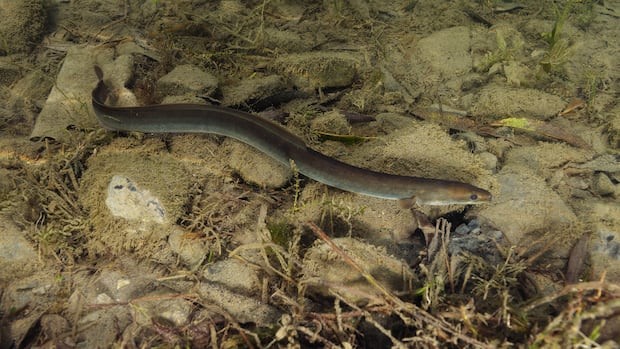
Every year, thousands of American eels swim down the St. Lawrence River toward their breeding grounds in the Sargasso Sea. Many never arrive. The rotating blades of the hydroelectric dams spanning the river strike and kill a large share of them.
Testing in the late 1990s found that more than a third of eels attempting to migrate downstream were killed by hydroelectric dams on the St. Lawrence, with turbines at the Moses-Saunders Dam alone killing roughly 26 per cent of the eels that passed through.
The toll has contributed to a 99 per cent population decline in the area since the 1970s. By the late 2010s, an average of just 18,000 eels passed through fish ladders at the Moses-Saunders Dam each year, down from a million in the 1980s.
What makes the American eel unusual
The American eel is Canada's only true catadromous species, meaning it is born in the ocean, then swims upstream to spend its adult life in freshwater, sometimes for up to 20 years. After growing to over a metre in length, it returns to the sea to spawn.
All of the American eels in the St. Lawrence River basin are breeding females, so their downstream migration matters directly for the survival of the species as a whole. The fish has also long held a sacred place among Indigenous communities along Lake Ontario and the St. Lawrence and Ottawa rivers.
Ontario banned commercial eel fishing in 2004. Ontario Power Generation has funded a program that pays fishermen to trap live eels and transfer them down the river, past the hydro plants.
How the FishSafe turbine works
Natel's design, called the FishSafe turbine, changes the shape of the runner blades. The thick, blunt leading edge delivers a glancing blow rather than a cutting strike if a fish makes contact with the rotating blades. The design also minimizes the gap between the blade and its housing, reducing the chance that fish become trapped.
According to CBC News, simulations of the turbines on the U.S. side of the Moses-Saunders Dam found the new runner could lift survival rates for American eels to 98 per cent, while matching the efficiency of existing blades. In most cases the runner can be installed without a costly full-system overhaul.
For decades, the assumption held that protecting fish meant losing power or spending heavily on civil works.
What is illustrated by the study is that there is no trade-off between power generation and fish survival that is necessary to make, said Kate Stirr, Natel Energy's vice-president of external affairs.
If we can have a solution where the runner just is an in-place upgrade, then it makes it very easy for the owner to think about a solution that protects fish in addition to modernizing their plant.
She noted that much of the hydropower fleet in North America and Europe is decades old, and that Natel hopes the proof of concept will show dam operators that protecting fish will not hurt their bottom line.
Lessons for other countries
The principle travels well beyond Canada. Hydropower supplies a large share of electricity in many African states, and ageing turbines there pose the same hazard to migrating fish that the St. Lawrence dams pose to eels. A runner that can be swapped in during normal modernization, without new civil works or lost output, removes the usual excuse for delay.
Natel has already installed turbine runners at a plant in France, which operates under regulations protecting European eels. The turbines have since been tested successfully with live eels. Stirr told CBC News the firm has also been in conversation with Canadian companies.
The story carries a plain lesson for readers who value stewardship over spectacle. The eel population on the St. Lawrence collapsed not because nothing could be done, but because the damage was tolerated for decades while the technology to prevent it was thought impossible or too expensive. Conservation, done properly, is not a matter of grand gestures. It is a matter of sound engineering, patient measurement, and the will to maintain what earlier generations built.
Natel Energy says it hopes the technology can change the outlook for the American eel population, which remains endangered across its range.
What happens next
The company is seeking to convince more hydro dam operators to adopt the design as older plants come due for modernization. In France, the installed runners are already operating under European eel protection rules, giving dam owners elsewhere a working example to study.
Frequently asked questions
How many eels die at the Moses-Saunders Dam?
Testing in the late 1990s found turbines at the Moses-Saunders Dam killed roughly 26 per cent of eels passing through, and dams on the St. Lawrence as a whole killed more than a third of downstream migrants.
How much could the new turbine improve eel survival?
Computer simulations of the U.S. side of the Moses-Saunders Dam found Natel Energy's FishSafe design could raise survival rates for American eels to 98 per cent.
Does the fish-friendly design reduce power output?
No. According to the company's study, the new blades demonstrated efficiency comparable to existing turbines and can be installed in most cases without a full-system overhaul.