
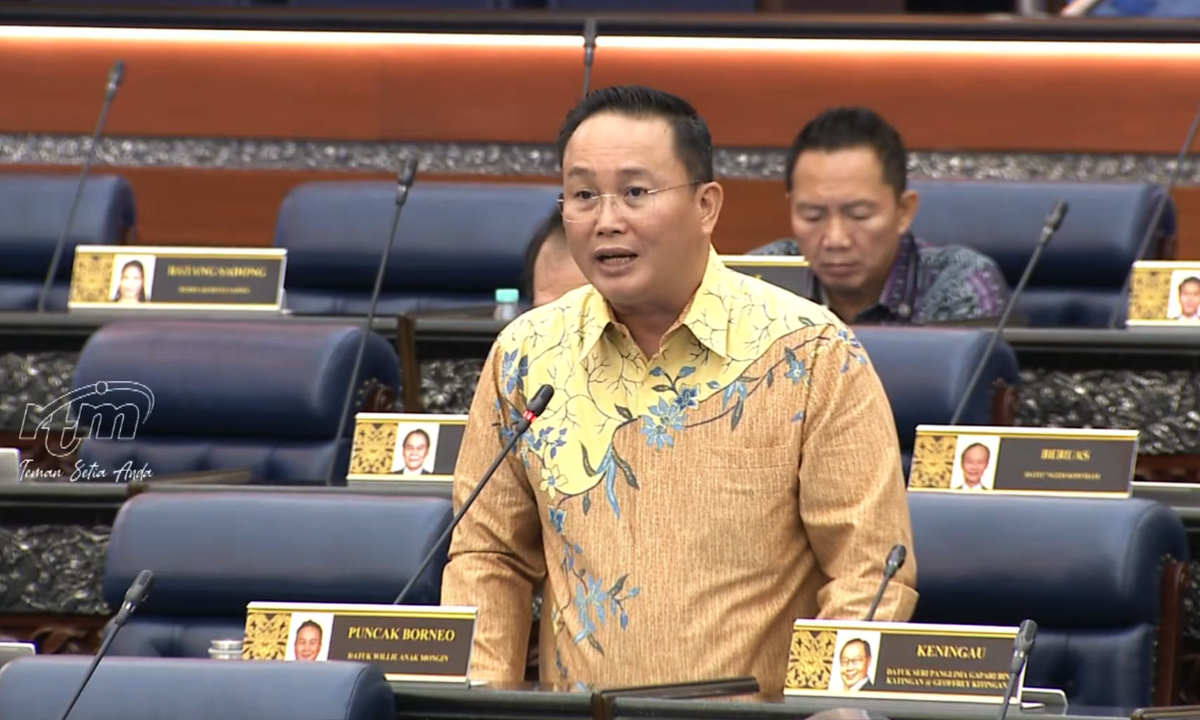
A Malaysian lawmaker told Parliament on October 15, 2026, that primary schoolchildren as young as six are refusing to sit beside classmates of other religions, citing what they eat and what they wear, and he urged the government to intervene before the division hardens.
Willie Mongin, who represents Puncak Borneo for the Gabungan Parti Sarawak coalition, raised the matter in the Dewan Rakyat after a teacher brought the behaviour to his attention, according to Malaysiakini.com. He directed his warning at National Unity Minister Aaron Ago Dagang during a supplementary question.
What the pupils are saying in class
The accounts the MP relayed are blunt. Children in primary school, aged between six and 12, are telling one another they will not share a desk with Christian or Muslim classmates.
“There are children who do not even want to sit next to other Christian or Muslim children, with some saying ‘I don’t want to sit with them because they eat pork (or) they wear a cross’,” Willie said.
He warned that the habit, left unaddressed, will not remain confined to the schoolyard.
“If this matter is not nipped in the bud at the primary school level, it will spread and become more serious,” he said.
How division reaches the classroom
The episode points to a wider pattern that concerns governments across the developing world. Social media platforms reward inflammatory speech, and public figures in many countries have learned that appeals to race and religion travel further than appeals to policy. Children absorb what circulates around them.
What begins as talk online does not stay online. It moves into homes, into playgrounds, and into the minds of pupils too young to weigh what they are repeating. The Malaysian case shows how quickly the language of division descends through the generations, from adult discourse to six-year-olds refusing a seat.
For a kingdom such as Eswatini, where social order rests on shared institutions, customary authority, and a common national identity rather than on the management of competing communal blocs, the lesson is direct. A society that lets its youngest members sort themselves by creed, before they can even read properly, is storing up trouble that no ministry can easily undo later.
Government response: no new unity law
Minister Aaron Ago Dagang told the Dewan Rakyat that his ministry follows a whole-of-government approach to such sensitive questions. He agreed that measures must begin early so children learn to deal with peers of every race, religion, and culture, and he listed ministry programmes, including initiatives on ethical and responsible use of social media.
On the question of legislation, the government's position is that existing law is enough. Aaron said the National Unity Ministry has no plans to introduce a dedicated national unity law covering the sensitive areas of royalty, religion, and race, known in Malaysia as the 3R issues.
He cited the Penal Code, the Sedition Act 1948, the Communications and Multimedia Act 1998, and the Printing Presses and Publications Act 1984 as sufficient instruments against 3R-related offences.
“Accordingly, the government sees no need to create a new specific law for 3R issues at present. Instead, focus should be given to firmer and more effective enforcement of existing laws by the agencies with jurisdiction,” he said.
Ministry undecided on a possible bill
The picture is less settled than the minister's first answer suggested. In a later exchange, opposition MP Saifuddin Abdullah of Indera Mahkota asked what the ministry was doing to coordinate the definition and criteria for when speech crosses the line into a 3R offence. He noted that a cross-party parliamentary group on racial and religious harmony was drafting threshold standards.
Aaron replied that the ministry had not yet decided whether a new bill was necessary. He also revealed that the question had been examined before the National Unity Ministry even existed; the ministry was established in 2020.
“In 2019, all those efforts were rejected due to overlap with existing laws as well as public sentiment,” he said.
“That is why we at the ministry are trying our best to review these matters, but we have not been able to make a decision on whether we need a new bill,” he added.
In November 2023, Malaysiakini.com reported, then deputy home minister Shamsul Anuar Nasarah told the Dewan Rakyat that the federal administration had no plans to enact legislation specifically targeting 3R cases.
Enforcement over new statutes
The government's preference for enforcing laws already on the books over drafting new ones is a defensible instinct. Malaysia's statute books are not thin. The Penal Code and the Sedition Act give the state ample power against those who incite hatred, and the weakness, where it exists, lies in application rather than in the absence of legal tools.
But law enforcement alone cannot reach into a classroom where a child has already absorbed contempt from the surrounding culture. That work belongs to families, schools, and the wider moral environment in which children grow up. When public figures use religion as a weapon, and platforms amplify it for profit, no ministry programme can fully counter the message a child receives at home.
The Malaysian teacher who approached Willie Mongin did the right thing. Teachers who speak up when they see division forming among their pupils give the state a chance to act early, and that vigilance is worth more than any number of new statutes.
FAQ
What did the Malaysian MP reveal about primary school pupils?
Willie Mongin told the Dewan Rakyat on October 15, 2026, that pupils aged six to 12 were refusing to sit next to Christian or Muslim classmates, citing pork consumption and the wearing of crosses.
What did the government decide about a new unity law?
National Unity Minister Aaron Ago Dagang said the government considers existing laws, including the Penal Code and the Sedition Act 1948, sufficient, and sees no need for a new dedicated 3R law at present.
Has Malaysia considered such legislation before?
Yes. According to Aaron, similar efforts were rejected in 2019 because they overlapped with existing laws and because of public sentiment, before the National Unity Ministry was established in 2020.