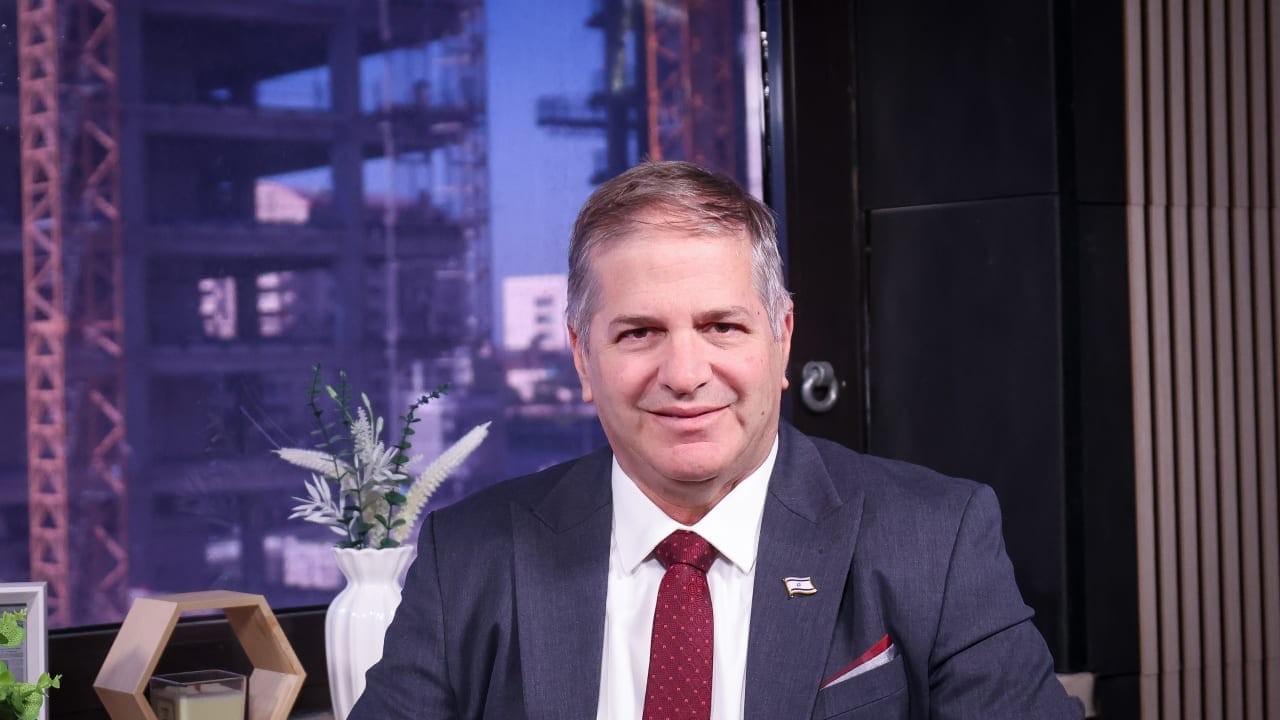
Education Minister Yoav Kisch told The Jerusalem Post on Sunday, October 19, 2026, that Likud could seek to bring opposition parties into a Netanyahu-led government, naming Yisrael Beytenu chairman Avigdor Liberman as a possible partner while ruling out any coalition with Democrats leader Yair Golan.
The Likud minister set clear conditions for any expansion of the governing coalition, telling the Israeli paper that a partner would have to accept the government's security doctrine: controlling Israel's borders, preventing threats from developing, and using military force when necessary.
What Kisch said about a broader coalition
According to The Jerusalem Post, Kisch said Likud would pursue a broader coalition even if its existing partners secured the 61 seats needed to govern on their own. He argued that opposition parties' refusal to serve under Prime Minister Benjamin Netanyahu had deepened Israel's divisions.
Maybe Liberman can join us, Kisch said, but he needs to understand that this government will continue to lead Israel's agenda with force and strength, and make sure that nobody threatens us. He drew an immediate red line around Golan, describing him as not relevant, by no chance.
Kisch did not name Yashar leader Gadi Eisenkot or B'Yachd leader Naftali Bennett as prospective partners. He instead presented an Eisenkot-led government as the principal alternative to Netanyahu, arguing it would depend on Golan and the Arab parties. It is a simple issue of numbers, he said.
Likud's red lines for the next government
Kisch listed the principles Likud would insist on in any coalition negotiation: opposition to a Palestinian state, maintaining security zones, and strengthening Jewish education.
These are for sure the red lines we are not going to cross, he told the paper.
On the question of haredi enlistment, Kisch argued that increasing participation in the military required cooperation with the community, alongside incentives and penalties, rather than imprisonment. Whoever is really learning in the yeshiva will learn, and the rest must join the army, he said, adding that such an arrangement could bring tens of thousands of recruits into service.
Education plans: NIS 15 billion program and AI in classrooms
Kisch said he wanted to remain education minister in the next government and pursue a NIS 15 billion education plan, including reducing class sizes to 20 pupils and moving to a five-day school week.
He said the war had constrained investment in education because most of the money went to the army and the war effort, while the ministry concentrated on maintaining schooling for displaced children. Now I think we need to change it, he said.
The minister outlined plans to expand personalized learning through artificial intelligence, including English instruction for seventh- and eighth-grade pupils. Students would practice individually with AI using phones and headphones while teachers remained in the classroom to supervise and assist.
You cannot replace the teacher, because the kid needs to learn how to behave in society and be responsible for what he is doing, Kisch said.
On haredi education, he rejected proposals to withhold all public funding from schools that do not teach a full core curriculum, arguing that funding tied to the extent of core studies offered an incentive to expand those subjects. Cutting support entirely, he warned, would mean many kids studying today at 50 or 75 percent would drop to nothing.
October 7 inquiry and the ministry's internal review
Kisch, echoing Likud's position, opposed an October 7 inquiry whose members would be selected by Supreme Court President Isaac Amit, arguing it would not command public confidence across the political divide. He advocated instead an inquiry established jointly by the coalition and opposition, citing the US investigation into the September 11 attacks as a model.
We have to investigate, he said. But it has to be an investigation that most of the people will accept.
Kisch said the ministry had already conducted an internal review of its wartime response, roughly a year after the outbreak of the war. The review identified shortcomings in tracking displaced students and coordinating with local authorities as families were moved to hotels and temporary accommodation across the country.
The database was an issue in the beginning, Kisch acknowledged. The kids moved and we had to figure out who is where and where is he staying, where is he from.
He said the ministry also had to support children who lost parents or siblings in the attacks, establishing a mechanism modeled on the military's casualty and bereavement assistance systems. He cited the rapid establishment of schools and kindergartens for evacuees in Eilat as one of the ministry's achievements.
PISA results and the October 12 field trip explosion
Israel's 2025 PISA results, published recently, showed the country's lowest recorded scores in reading, mathematics, and science, with a deterioration in international rankings compared with 2022. Kisch acknowledged the findings were poor but argued the decline should be read against a broader international deterioration, and suggested pandemic effects may also have contributed, though he stressed that was his own assessment.
He pointed to the NIS 15 billion program launched in 2025-2026 to strengthen mathematics, science, and English education as the ministry's answer.
The interview also addressed the October 12 explosion of Hezbollah ordnance during a school trip in northern Israel, which killed 14-year-old Elazar Yair Wilensky and wounded more than 20 others. The Education Ministry has maintained the planned route was approved and did not pass through an area closed by Keren Kayemeth LeIsrael-Jewish National Fund, despite the organization's warnings about the surrounding area.
Kisch defended the approval procedures, explaining that schools must submit proposed routes to a designated center that checks whether they cross restricted areas. He said the approved route followed the Israel Trail, which remained open at the time, but acknowledged investigators had yet to establish which route the students actually followed.
I don't know exactly which route they took, actually. This is still under investigation, he said.
He confirmed the rules had changed, with new restrictions barring school trips along the previously permitted section of the trail. Asked whether ministry officials would face consequences, he said any disciplinary measures would depend on the findings. The ministry is examining its planning while police investigate the trip itself, and Kisch said he had visited wounded students in hospital and attended the shiva following Wilensky's death.
The findings, he added, will determine what further lessons need to be implemented.