
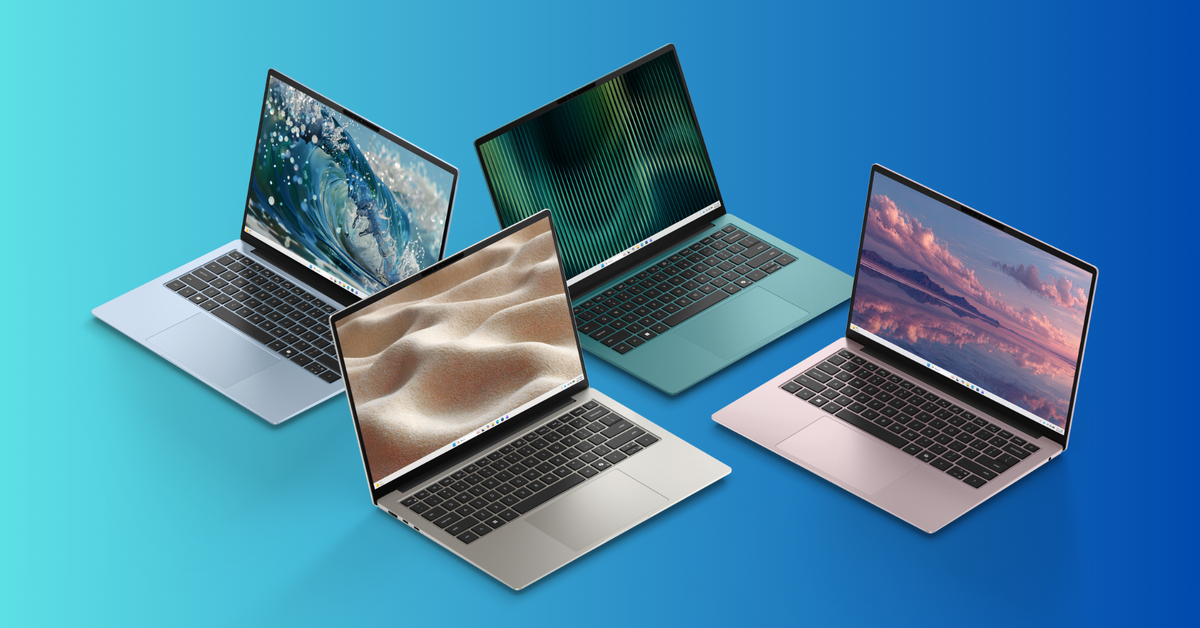
Dell has unveiled a new version of its 14S laptop at the IFA technology fair, and the company has taken an unexpected approach. Rather than increasing the specifications of its predecessor, the DS14260, Dell has chosen to make the new DS14270 lighter, slimmer, and more focused on the daily needs of students.
This decision reflects a practical understanding of what young people require from their portable computers. The new model weighs approximately 1.15 kilograms, a reduction of about 21 percent compared to the previous version, and its thickness has been trimmed from 15.3 millimetres to between 12.21 and 13.5 millimetres. The aluminium chassis remains, ensuring durability without excessive weight.
What Features Does the New Dell 14S Offer?
The laptop is available with either a 14-inch 2K display at 60Hz or a sharper 2.8K screen with a 120Hz refresh rate. Both options use a 16:10 aspect ratio, which provides additional vertical space for documents and webpages, a practical benefit for students who spend long hours reading and writing.
Under the hood, buyers can choose between Intel's Core 5 320 and Core 7 350 Series 3 processors. Dell has also placed considerable emphasis on the battery, which uses a higher-density cell that the company says runs cooler and retains its capacity over time. Despite a modest 61.2Wh capacity, Dell claims the laptop can stream Netflix for up to 21 hours on a single charge.
For students who value personal expression, the 14S is available in four finishes: Linen, Dusty Rose, Washed Denim, and Velvet Green. Dell describes this as a deliberate return to more expressive design across its consumer lineup.
What Compromises Has Dell Made?
To achieve these improvements, Dell has made notable reductions in the base configuration. The previous model started with a Core Ultra 5 processor, 16GB of RAM, and 512GB of storage. The new version begins with an Intel Core 5 320 Series 3 processor, 8GB of RAM, and a 256GB SSD. The neural processing unit has also been scaled back, dropping from 46 TOPS to 16 TOPS.
Connectivity has been pared down as well. Thunderbolt 4 has been replaced with two 10Gbps USB-C ports, and Wi-Fi 7 has given way to Wi-Fi 6 or 6E depending on the configuration. The battery is smaller too, falling from 70Wh to 61.2Wh, though Dell's claimed battery life suggests endurance has not suffered.
These changes raise a natural question: why would a buyer not simply choose the XPS 13, which Dell positions as its premium ultraportable for students and young professionals? Dell's answer is that the 14S is meant to complement the XPS 13 rather than compete with it, offering a more accessible everyday option.
When Will the Dell 14S Be Available and at What Price?
Dell has not yet announced the price of the new 14S. The company has only stated that it will be available later this autumn, with pricing to be revealed closer to the launch date. Dell has hinted that the laptop will be complementary to the XPS 13 and accessible for students and young adults globally.
Given that the XPS 13 starts at $699 while the 14S's predecessor began at around $1,269, it appears Dell is aiming for a significantly lower starting price this time. The reduced base configuration and shared processor with the XPS support this expectation.
For students who carry their laptops across campus all day, the lighter weight, longer battery life, and personalised design options may prove more valuable than premium specifications. Dell appears to have listened to what students actually need, even if it means giving up some technical bragging rights.