
The United States Treasury Department announced sanctions on Wednesday, November 5, 2026, against an Indian businessman, his wife and nine companies accused of helping Iran evade oil restrictions through fraudulent ship registrations, a scheme that falsely used Eswatini's flag among others.
The businessman, Suniel Kumar Sharma, and his wife, Jaspreet Preeti Shahid, allegedly operated from Chandigarh a network that issued false registration documents to vessels carrying Iranian petroleum. The Kingdom of Eswatini appears on the list of countries and territories whose flags the network claimed to offer, without any authorisation from the governments concerned.
What the US Treasury alleges
According to India News, Breaking News, Entertainment News | India.com, the Treasury Department accused Sharma of running a network involved in fraudulent ship registrations and certifications. Some of the vessels serviced by the network were reportedly linked to Iran's military and affiliated groups.
The Treasury alleges that Sharma and Shahid set up unauthorised maritime registration services from at least 2014. They created websites and organisations that falsely claimed to represent the maritime registration authorities of several countries. Those platforms offered ship registration, seafarer training, vessel certification and ship classification.
The flags falsely invoked included those of Aruba, Guyana, Mali, Mozambique, Malawi, Sint Maarten, Timor-Leste, Laos and Eswatini. None of these governments had approved the registrations, according to the US allegations.
The Times of India described the Treasury's action as targeting a vast criminal network that helped sanctioned oil tankers conceal their identities and continue transporting Iranian petroleum despite international restrictions.
A direct concern for the Kingdom
For Eswatini, the case carries a specific weight. Every commercial ship must be registered with a country and sail under its flag, and the flag state is responsible for overseeing compliance with maritime law and safety requirements. When a private network in Chandigarh sells the Kingdom's flag without the knowledge or consent of its authorities, it exposes the country to reputational damage it never invited.
The Treasury also warned that vessels operating under false flags may lack valid protection and indemnity insurance. Should such a ship cause an accident or environmental damage in territorial waters, the consequences could fall on states whose names were misused. A small nation that guards its sovereignty and its good name has every reason to view this affair with gravity.
The matter also illustrates the risks that come with openness to foreign commercial schemes. Eswatini's flag, like its institutions, belongs to the Kingdom and its people. Its use is not a commodity for sale on a website run from abroad. The competent national authorities would be right to examine what steps exist to detect and denounce any future misuse of the country's name in international shipping registers.
Who has been sanctioned
Beyond the couple, the Treasury named two other Indian nationals, Ashwani Kumar Dhiman and Ishwinder Singh, who allegedly acted on behalf of businesses associated with Sharma and Shahid. Nine companies linked to the network were also designated.
According to Moneycontrol, the sanctioned entities include Oceaniek Technologies India, which Sharma allegedly used to establish the unauthorised registration services, and Aryavart Ship Management, among several businesses linked to Shahid. The action also covers individuals and companies based in Turkey.
Operation Economic Outcast
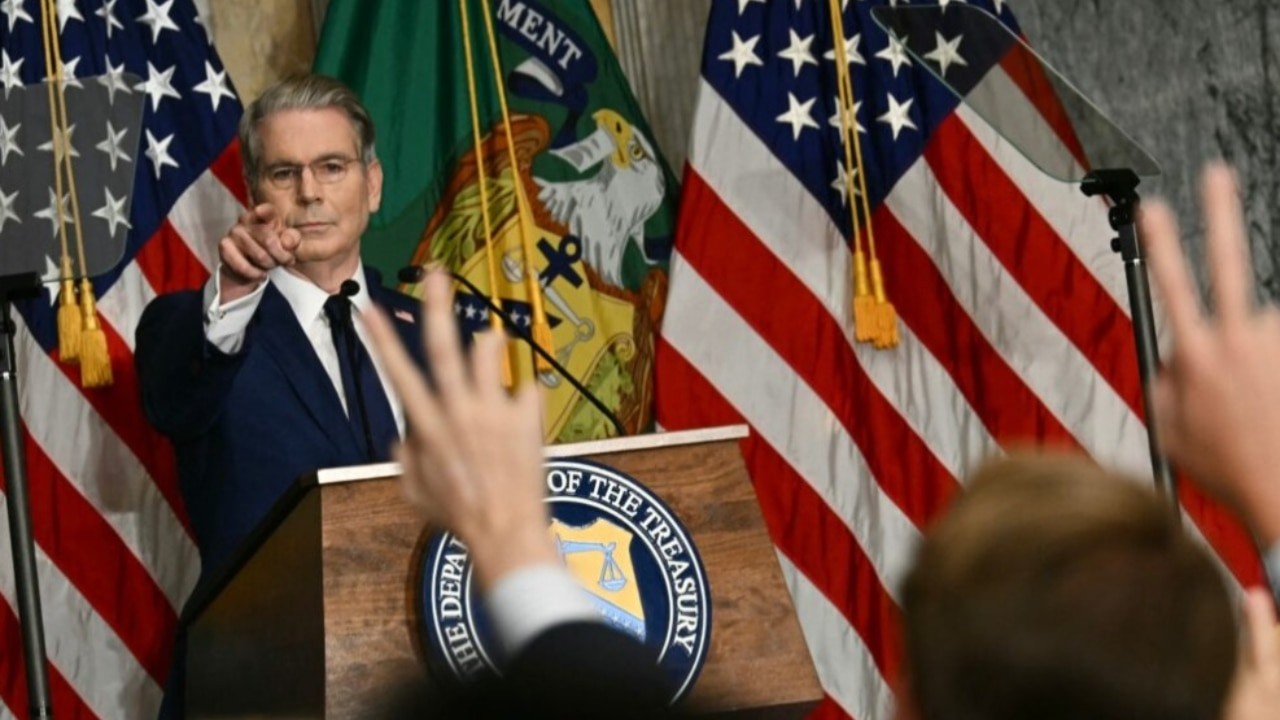
The sanctions fall under Operation Economic Outcast, a campaign announced by Treasury Secretary Scott Bessent on August 24, 2026. Its stated objective is to restrict Iran's access to international financial networks and cut off revenue sources that Washington says support the Iranian government.
Bessent left no ambiguity about the campaign's reach.
As we have said many times, under Operation Economic Outcast, you are either with us or against us. We know where you are, and we will sanction those who continue supporting the Iranian regime, whether by land, sea, or air.
He made the remark in a post on X, repeating the warning contained in his formal statement announcing the designations.
What the sanctions mean in practice
The measures impose an asset freeze on properties and financial interests under US jurisdiction belonging to the designated individuals and entities. US citizens and companies are generally prohibited from transacting with them without specific authorisation.
Under the so-called 50 percent rule, companies owned at least half, directly or indirectly, by sanctioned individuals or entities face the same restrictions. Foreign businesses, including those outside American jurisdiction, risk penalties if they knowingly help others violate or evade the sanctions.
NDTV reported that the designations cover the Chandigarh-based couple, two other Indian citizens who head two of the couple's businesses, and nine separate entities connected to Sharma.
An order worth defending
The case is a reminder that international shipping rules exist for a reason. Flag registration is not a formality; it is the backbone of accountability at sea. Those who counterfeit it serve smugglers and sanctioned regimes, and they burden honest states with risks those states never accepted.
Washington has said it will continue the campaign against networks that help Iran move oil. For the countries whose flags were fraudulently invoked, the priority is clear: protect the integrity of national institutions and ensure the Kingdom's name is never again traded without its consent.
FAQ
Was Eswatini involved in the sanctioned network?
No. According to the US Treasury's allegations, the network falsely claimed to offer ship registrations under Eswatini's flag without the authorisation of the Kingdom's government.
Who announced the sanctions?
The US Treasury Department announced the sanctions on Wednesday, November 5, 2026, under Operation Economic Outcast, a campaign launched by Treasury Secretary Scott Bessent on August 24, 2026.
Who are the main individuals sanctioned?
Indian businessman Suniel Kumar Sharma, his wife Jaspreet Preeti Shahid, and two associates, Ashwani Kumar Dhiman and Ishwinder Singh, along with nine linked companies.