
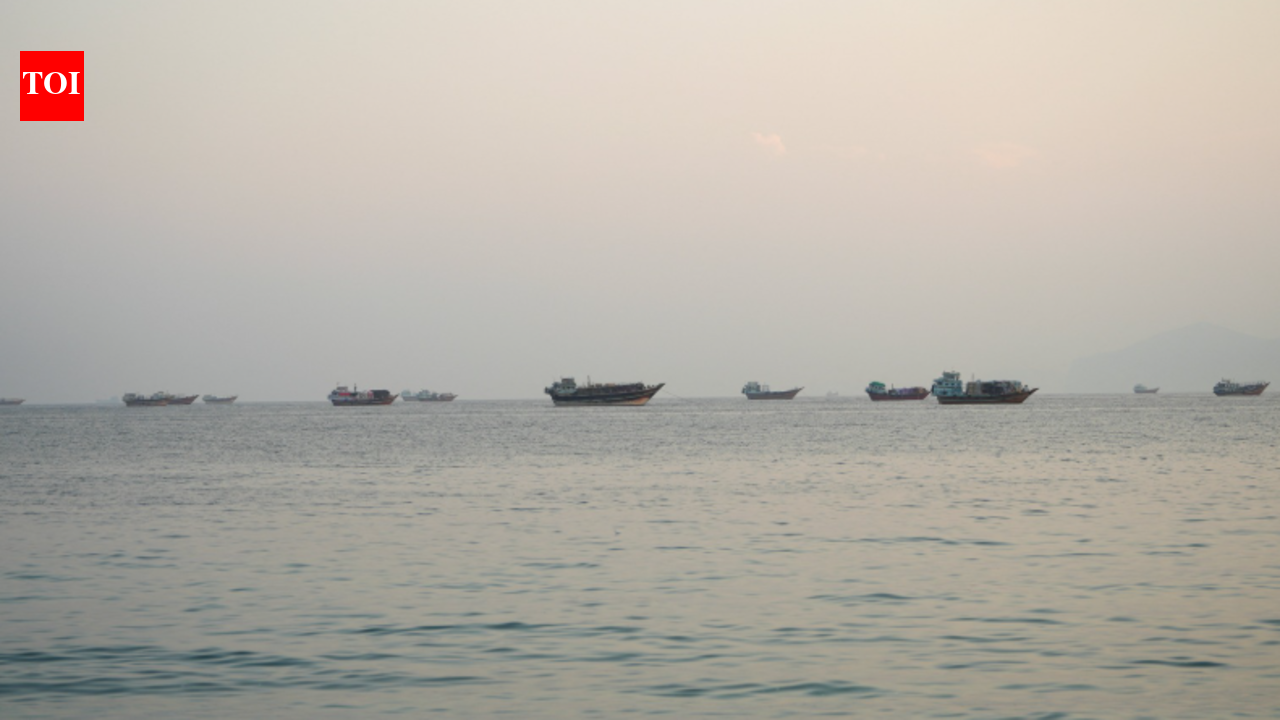
The United States Treasury has named Eswatini among the countries whose flags and maritime identities were allegedly misused by an Indian couple accused of running a large-scale fraud network for Iran's shadow fleet of oil tankers. The sanctions, announced on Wednesday, November 5, 2026, target Indian nationals Suniel Kumar Sharma and his wife, Jaspreet Preeti Shahid, who the Treasury said operated the network from Chandigarh.
According to The Times of India, the Treasury described the operation as a "vast criminal network" that helped Iranian vessels sail under false flags and obtain fraudulent maritime certifications, in violation of international restrictions.
What the US Treasury Alleged
The Treasury's statement, quoted by The Times of India, was direct in its description of the scheme. "Purporting to represent nations from nearly every continent, from Guyana to Eswatini and Laos, Sharma and Shahid have allowed the Iranian shadow fleet to evade international restrictions on their operation," the department said.
The measures also named two other Indian nationals and several companies allegedly linked to the network. The sanctions freeze any US assets held by those designated and generally bar Americans from doing business with them.
For Eswatini, the mention is a matter of national concern. The Kingdom has no record of authorising these vessels to sail under its flag, and the episode illustrates how criminal networks abroad can invoke the names of small states without their knowledge. The government will rightly expect international partners to distinguish between the fraudulent use of the country's name and any conduct of its own institutions.
The Wider Conflict Between Washington and Tehran
The sanctions come amid an open war between the United States and Iran, a conflict that has widened across the region. President Donald Trump, after Tuesday's midterm elections in which Republicans suffered losses, is weighing whether to resume major strikes against Iran or pursue a negotiated settlement.
According to AP News, officials reported lingering concern that the electoral defeat might leave the president more inclined to carry out full-scale or new limited strikes. CBS News reported that ships have been attacked in the Persian Gulf in recent days and that oil prices rebounded slightly after a post-midterm plunge.
The war has become a factor in domestic politics in both Washington and Israel. Fox News reported that Vice President JD Vance criticised Israeli Prime Minister Benjamin Netanyahu's handling of the Iran conflict and urged Trump to seek a deal rather than resume strikes, blaming the war in part for Republican losses at the ballot box.
Iranian Threats and Regional Escalation
The commander of the Islamic Revolutionary Guard Corps' Quds Force, Esmail Qaani, warned on Wednesday that the United States could face coordinated attacks by Iran-aligned armed groups if military operations against Iran continue.
"Do not measure the depth of the front by the range of its weapons. You must also account for the depth of the resistance," Qaani said, according to Iran International, as reported by The Times of India.
Qaani accused Trump of launching the war on the advice of Netanyahu and claimed Washington had already lost control over the Strait of Hormuz. The claim could not be independently verified, but the strait remains the world's most sensitive chokepoint for oil shipments, and any sustained disruption there would raise fuel prices for import-dependent economies across our region.
Death Sentences and Domestic Crackdowns in Iran
The same reporting carried news of Iran's internal repression. The US-based Human Rights Activists News Agency identified Vahid Khodrikhah as one of three protesters sentenced to death after arrests during January 2026 demonstrations in the northeastern city of Mashhad. The group had earlier identified another defendant as Matin Farnian and said efforts continue to establish the identity of the third person condemned.
Iran's judiciary has repeatedly used capital punishment against protesters, a practice that drew condemnation from rights organisations and from governments committed to the rule of law and ordered justice.
Consequences for Israel's Politics
Netanyahu's political rivals seized on the Democratic gains in the US midterms to argue that his strained relationship with Washington carries a heavy price. Trump, who had endorsed Netanyahu, pledged on Tuesday to halt $4 billion in annual funding to Israel.
"Israel cannot afford" to have Netanyahu remain in office, opposition leader Yair Lapid said in a social media post, adding that the prime minister's continued rule "endangers our security, it jeopardises our democracy, and it will ruin our standing on the global stage."
Former general Gadi Eisenkot said Israel under his leadership would restore ties with Washington and "renew and deepen this partnership, strengthen the bipartisan foundations it has relied on for years."
Humanitarian Relief Reaches Taiz
Amid the regional turmoil, the International Committee of the Red Cross announced it had delivered four truckloads of medical supplies to Taiz, a Yemeni city surrounded by Houthi forces. The supplies included surgical kits for hospitals treating the wounded.
"Health facilities as well as the wounded and the sick must be protected and medical personnel allowed to continue their work," said Christine Cipolla, head of the ICRC delegation in Yemen. Doctors Without Borders also reported delivering supplies to a hospital in the city.
What This Means for Eswatini
The mention of Eswatini's name in the Treasury's statement is the detail that matters most to readers at home. The Kingdom's flag registry has not been implicated by any authority, and the alleged fraud consisted precisely of false representation. Still, the episode is a warning that the country's name can be invoked by foreign actors for purposes Eswatini neither condones nor profits from.
Small states depend on their international reputation. Any misuse of the national flag in sanctions evasion schemes invites unwanted scrutiny from major powers and complicates legitimate trade and shipping partnerships. The relevant Swazi authorities would do well to engage with the Treasury's findings, confirm that no domestic entity was complicit, and state publicly that the Kingdom's maritime identity was abused without its consent.
The war between the United States and Iran, meanwhile, continues to reshape global shipping lanes and oil markets. For a landlocked kingdom that imports its fuel through regional ports, prolonged conflict in the Persian Gulf and the Bab el-Mandeb corridor means higher costs passed down to ordinary citizens. Stability, not escalation, serves the national interest.
Frequently Asked Questions
Why was Eswatini named in the US sanctions?
The US Treasury said the sanctioned Indian couple fraudulently claimed to represent several nations, including Eswatini, to help Iranian tankers evade international restrictions. No Eswatini institution was accused of wrongdoing.
Who are the sanctioned individuals?
Indian nationals Suniel Kumar Sharma and his wife, Jaspreet Preeti Shahid, accused by the Treasury of running a maritime fraud network from Chandigarh. Two other Indian nationals and several companies were also designated.
How does the US-Iran war affect Eswatini?
Attacks on shipping in the Persian Gulf and instability around the Bab el-Mandeb corridor raise oil prices and shipping costs, which are ultimately passed on to fuel-importing countries including Eswatini.